


Headline CPI eased to 3.4% and core fell to 2.5%, giving the Fed room to hold in September. AI stocks rallied, oil stayed above $83 as Iran reported no progress on peace talks, and Bitcoin slipped below $64,000.
CPI gave stocks what they wanted. It did not give every market the same trade.
The S&P 500 gained about 0.3% Wednesday and the Nasdaq rose 0.7%, while the Dow stayed near flat.
July CPI rose 0.1% from June and 3.4% from a year ago. Core prices rose 0.2% on the month and 2.5% over the year. Both annual rates eased by 0.1 percentage point from June.
AI names took the bid.
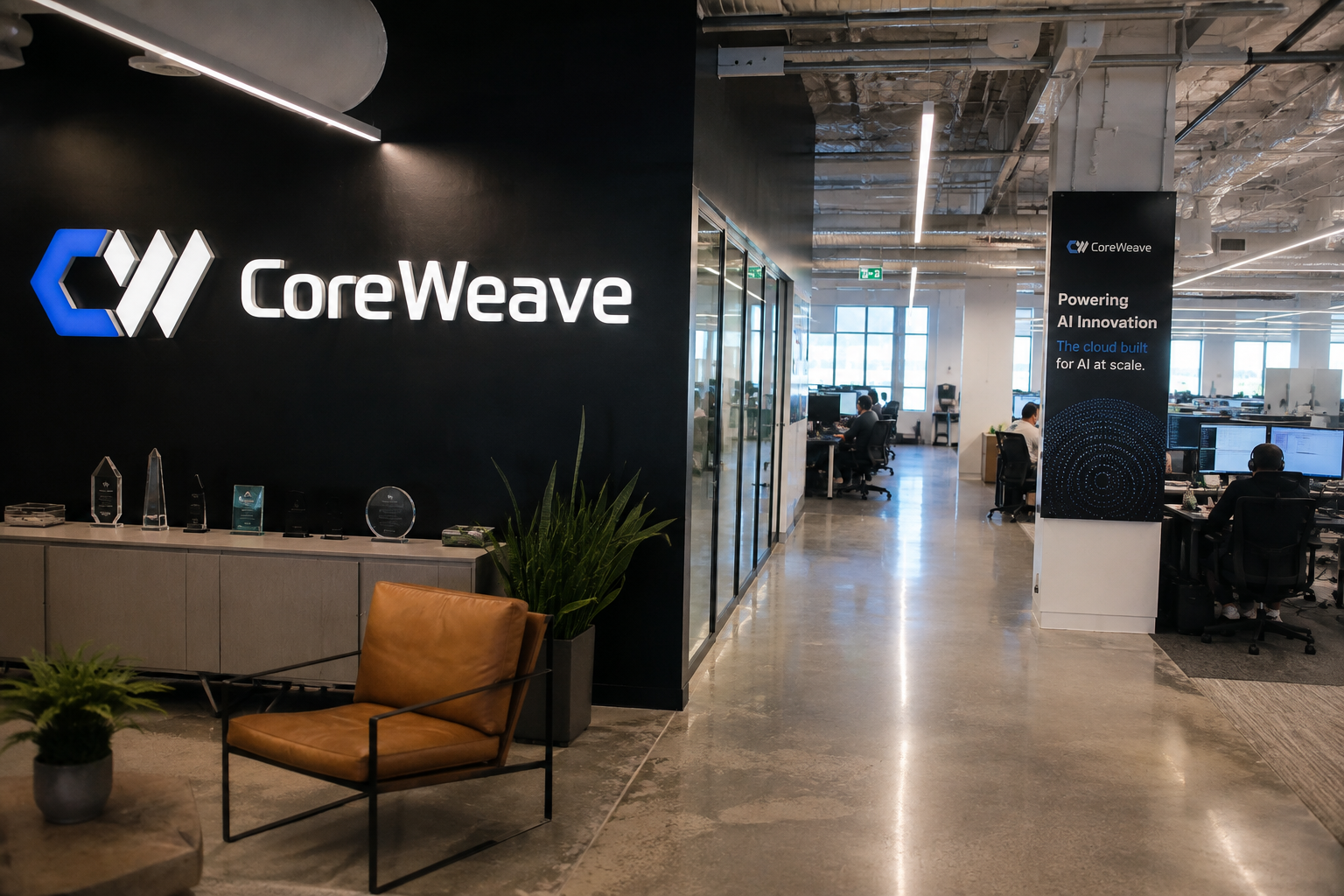
CoreWeave (CRWV) jumped 18% after revenue doubled and margins beat estimates. Super Micro Computer (SMCI) rose 17%, Dell (DELL) gained more than 6%, Micron (MU) nearly 7%, and Nebius (NBIS) surged more than 27%.
The bond market was calmer.
The 10-year held near 4.69%, while the 2-year slipped to about 4.20%. Markets now put the chance of a September hold near 62%, with the Fed still at 3.50% to 3.75%.
The Signal
CPI removed the immediate hike threat. AI stocks used the room. Bonds did not chase it because one clean inflation print does not settle September.
AI's "All In" Moment
In the dot-com days, former Wall Street money manager Alexander Green bought Apple under $1. Netflix at $1.62. Amazon under $2. (Split adjusted.)
Now he's doing the same with AI.
And he says it's the biggest opportunity he's seen in 40 years.
Every few decades, a window opens that can change your financial life forever.
The inflation report cooled. The oil problem did not.
WTI remained above $83 as Iran said there had been "absolutely no progress" toward restoring the June interim peace agreement. Tehran says Washington must return to the earlier framework and meet its commitments. Washington says Iran failed to reopen Hormuz.
That dispute keeps the strait tied to the wider war rather than a simple shipping agreement.
The IEA now expects global oil demand to fall by 1.6 million barrels a day in 2026, a cut of another 510,000 barrels a day from its July forecast. High prices are destroying demand even as supply remains disrupted. Global oil supply in July was 6.3 million barrels a day below a year earlier.
The buffer is also thinning.
Global observed inventories fell below 7.9 billion barrels in July for the first time since April 2025. U.S. emergency crude reserves are below 300 million barrels, their lowest in more than four decades.
Energy Signal
Hormuz has not created a full shortage. It has created something slower. Prices are cutting demand while the inventory cushion keeps getting smaller.
July CPI landed exactly where the Fed needed it.
Headline inflation eased to 3.4% from 3.5%. Core fell to 2.5% from 2.6%. Energy prices dropped 1.5% during July after falling 5.7% in June, though they remain 14.7% higher than a year ago. Food and shelter each rose 0.1%.
That follows a July jobs report that showed payrolls falling by 23,000. Together, the two reports weaken the case for an immediate hike.
Markets now see roughly a 62% chance the Fed holds in September. The 10-year yield near 4.69% shows why the relief has limits. August payrolls and another CPI report still arrive before the next meeting.
Fiscal policy adds another constraint. The U.S. ran a $432.3 billion deficit in July, the largest monthly shortfall since March 2021 and 48% above a year ago. The fiscal-year deficit is now near $1.8 trillion.
Interest expense has reached $1.17 trillion this fiscal year on $39.9 trillion of federal debt.
Gold liked that combination. GLD gained about 1%, while China added 19.9 tons of gold in July, extending its buying streak to 21 months.
Macro Signal
Inflation bought the Fed time. A $432 billion monthly deficit explains why the long end did not celebrate with it.
Middle East Conflict Lights Fuse on US Debt Bomb
America was already drowning in $38 trillion of debt, but the recent conflict in the Middle East just accelerated the timeline.
As oil spikes, a 100-year-old stock market signal that accurately predicted the 2008 and 2020 crashes is flashing a massive "Sell" on dozens of popular U.S. equities.
If you hold the wrong stocks when this debt crisis hits, it could wipe out years of gains.
Click here to see the 10 popular stocks to dump immediately
11780 US Highway 1, Palm Beach Gardens, FL 33408-3080 Would you like to edit your e-mail notification preferences or unsubscribe from our mailing list? Copyright © 2026 Weiss Ratings. All rights reserved.
The AI trade returned to its simplest form Wednesday. Growth won.
CoreWeave jumped 18% after reporting revenue that doubled from a year ago. Super Micro Computer gained 17% on strong guidance, while Dell, Micron, and Nebius joined the rally.
The move matters after weeks of questions about the debt needed to fund AI infrastructure. Wednesday showed that investors will still pay for the buildout when revenue and margins support it.
Goldman Sachs (GS) is making a similar bet on structured crypto products. The bank agreed to acquire Neos Investments for up to $2.25 billion. Neos manages more than $30 billion across 19 ETFs, including bitcoin and ether income products.
Its largest crypto fund, BTCI, has more than $1 billion in assets. The products use crypto-linked exchange-traded products and options to generate income rather than holding coins directly.
Capital Signal
AI infrastructure is moving from promise to revenue. Crypto exposure is moving from spot ownership toward structured income. Capital is still available, but it wants a cash flow attached.
Bitcoin got the inflation print bulls wanted. The price barely cared.
BTC slipped below $64,000 after CPI and remains trapped in its recent $62,000 to $66,000 range. Headline inflation at 3.4% removed the risk of an immediate hawkish shock, but it did not create a new liquidity catalyst.
Options markets show the same caution. Protection around $60,000 remains more expensive than upside exposure near $70,000. Implied volatility is also near historically low levels, suggesting traders treated CPI as confirmation rather than a regime change.
The institutional story is still expanding. Goldman Sachs' purchase of Neos brings bitcoin and ether income ETFs inside its asset-management business. That is a different form of adoption from spot ETFs. Investors are starting to package crypto into yield products rather than simply betting on price.
For Bitcoin itself, $66,000 remains the first test. A clean break could reopen $70,000. Until then, the range still owns the trade.
The Verdict
CPI removed one reason to sell Bitcoin. It did not provide a reason strong enough to buy the breakout.
Trump’s Secret Plan to Unlock $7.5 Trillion for Patriots?
With this audacious move, President Trump could seal his historic legacy.
Minting a whole new generation of American millionaires in the process.
And nobody is paying attention.
But in this jaw-dropping new video, one ex-Wall Street insider exposes the smoking gun evidence that a Trump-approved $7.5 trillion tsunami is about to hit the markets.
Including a personal letter, written by President Trump himself, revealing why phase one of this secret plan could be just days away.
Click here for full details on the secret plan to unlock $7.5 trillion for American investors NOW.
Wednesday answered the inflation question without resolving the market.
CPI eased to 3.4%. Core fell to 2.5%. Stocks liked it, and AI names liked it more. The Fed now has room to hold in September.
But the 10-year stayed near 4.69%. Oil stayed above $83. Iran said peace talks have made no progress. Global oil inventories are shrinking, while the U.S. just posted a $432.3 billion monthly deficit and $1.17 trillion in annual interest costs.
Bitcoin told the same story in another market. The bad outcome disappeared, but the bullish one never arrived. Price stayed below $64,000.
That is Wednesday's real read.
CPI bought the Fed time. It did not buy conviction.
