


The Dow closed at another record while SpaceX begins its largest insider unlock. Hormuz talks continue, Bitcoin holds near $64,500, and Friday's payrolls report becomes the week's biggest macro event.
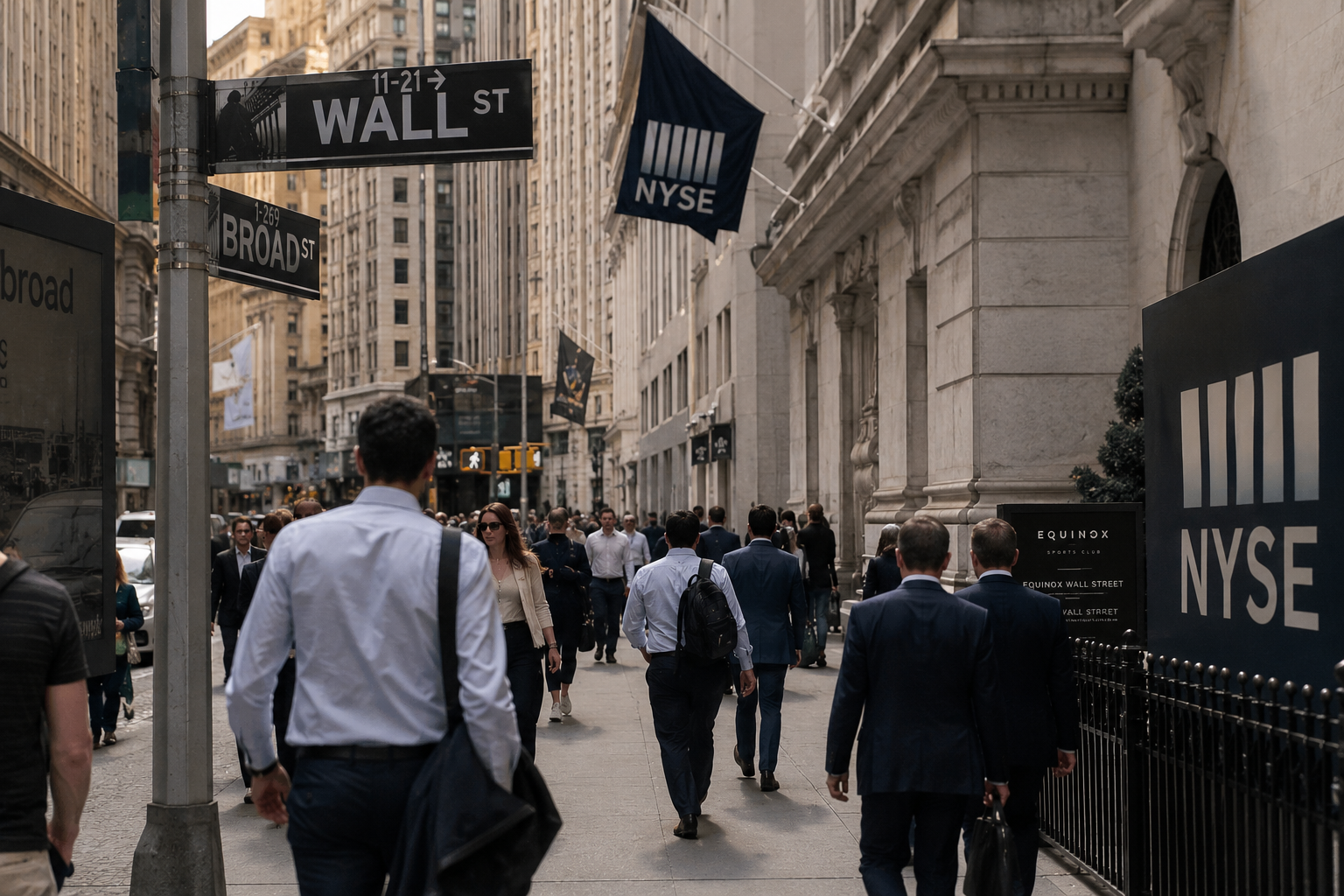
Wall Street reached another record. Under the surface, leadership became much narrower.
The Dow climbed 391 points, or 0.87%, to close at a record 54,558, marking its fifth straight gain. The S&P 500 finished little changed after touching another intraday high before slipping about 0.2%. The Nasdaq fell 0.8% as post earnings selling in SpaceX (SPCX) and AMD (AMD) offset strength elsewhere. Nvidia (NVDA) gained more than 3% after Elon Musk said future SpaceX AI infrastructure would rely exclusively on Nvidia processors.
Asia was less convinced.
Japan's Nikkei lost 0.5%, South Korea's Kospi dropped 1.8%, SK Hynix fell 6.7%, and Samsung Electronics lost nearly 3% as investors continued reducing exposure to AI hardware names.
U.S. futures are mixed this morning.
Dow futures are higher by more than 100 points while Nasdaq futures are modestly lower.
Today's calendar is full. SpaceX's first insider lockup expires, Airbnb (ABNB) and Warner Bros. Discovery (WBD) report earnings, Congress faces another opportunity to advance the CLARITY Act, and Friday's payroll report remains the week's biggest event.
The Signal
The Dow keeps setting records, but the market is becoming more selective. Investors are rewarding steady earnings while demanding much more from AI companies.
7 Income Machines Built to Make You Rich
The 7 Stocks to Buy and Hold Forever aren’t just plays for the next quarter - they’re built to deliver for decades.
These are blue-chip companies with fortress balance sheets, elite dividend track records, and the staying power to outperform in bull and bear markets alike.
Some are Dividend Kings, others are on the path there, and all are proven wealth compounding machines.
Download the full list now - before it disappears behind the paywall.
Oil paused after several days of selling as traders waited for more details on Hormuz.
Brent crude held near $80 a barrel while WTI traded close to $76. Iran confirmed it reached an agreement with Oman on coordinates for a new shipping route through the Strait of Hormuz, with both sides drafting a joint statement. Tehran described the agreement as only a partial solution, saying a full reopening still depends on the United States ending its naval blockade.
The market largely ignored another Houthi attack on a Saudi tanker in the Red Sea. Diplomacy continues to outweigh military headlines for now.
That distinction matters.
A temporary shipping arrangement lowers immediate supply risk, but it does not fully restore one of the world's busiest energy routes. Until Washington and Tehran agree on broader terms, shipping costs and insurance premiums are likely to remain elevated.
Energy Signal
Markets are pricing a new shipping route, not a fully reopened Strait. That difference will continue driving oil prices.
Attention now shifts almost entirely to Friday's jobs report.
The 10-year Treasury yield eased toward 4.62%, pulling back from this week's highs as lower oil prices and soft ADP payroll data reduced immediate pressure for another Fed hike. Long-term yields remain elevated because investors still question whether inflation is fully under control.
Fed Chair Kevin Warsh has offered very little guidance since taking office. Instead, he has repeatedly said policy decisions will depend on incoming data rather than forward promises.
Tomorrow's payroll report is expected to become the deciding factor.
A stronger labor market would reinforce arguments from the three Fed officials who wanted an immediate rate hike last week. A weaker report would support the case for holding rates steady into September.
Markets are no longer waiting for Fed speeches. They are waiting for economic data.
Macro Signal
Oil helped yields fall this week. Payrolls will decide whether that move lasts.
"A Dangerous Financial Plan Unfolding in D.C. Could Cost You 40% of Your Wealth"
Former Goldman Sachs executive who traded through Black Monday warns this plan is all written down in black and white, spearheaded by a financial insider who infiltrated the Federal Reserve... It's gone "viral" in the hedge fund circles… and yet practically nobody on Main Street understands this financial shock playing out across America. He lays out all the evidence... plus a detailed roadmap for exactly what to do. (And it doesn't require shorting... options... or perfectly "timing the market.")
You must see this critical market briefing today.
This ad is sent on behalf of Stansberry Research, 1125 N Charles St, Baltimore, MD 21201. If you would like to optout from receiving offers from Stansberry Research please click here.
Today belongs to SpaceX.
The company's first insider lockup expires, making roughly 911.5 million shares eligible for trading. At current prices, that represents about $101 billion of stock becoming available, far larger than SpaceX's current public float.
Management designed a staggered nine-stage release schedule to reduce selling pressure, but today's unlock remains the largest by far.
The timing adds another challenge.
SpaceX shares already fell roughly 13% after earnings despite reporting 92% revenue growth and narrower losses. Investors instead focused on AI capital spending, which surged sixfold to $18.4 billion.
AMD delivered a similar lesson. Revenue beat expectations and data center demand remained strong, yet shares still fell because margins disappointed.
The market's message has become clear.
Growth alone is no longer enough. Investors now expect companies to show that AI spending produces profits, not simply bigger infrastructure budgets.
Capital Signal
SpaceX's lockup matters more than its earnings today. The market is testing whether investors still have room to absorb another wave of AI supply.
Bitcoin remains stable, but the market underneath it is changing.
Bitcoin continues trading near $64,500, yet one long-term trend quietly ended this week. The S&P 500-to-Bitcoin ratio moved above its 200-week moving average for the first time since Bitcoin launched in 2010. The Nasdaq shows the same pattern.
That does not mean Bitcoin is collapsing. It suggests traditional equities have begun outperforming after more than a decade in which Bitcoin consistently led.
ETF demand remains supportive.
BlackRock's (BLK) IBIT helped drive another day of positive inflows, although overall buying remains well below early 2026 levels.
The regulatory picture weakened further. No cloture motion was filed for the CLARITY Act, making a Senate vote before the August recess increasingly unlikely. Prediction market odds for passage this year have fallen into the low teens.
Security also remains a concern.
Losses tied to the Coldcard hardware wallet firmware flaw have now climbed to roughly $120 million as additional wallet sweeps continue.
The Verdict
Bitcoin is holding its price, but the market around it is changing. Institutional demand remains steady while regulation and security continue moving in the wrong direction.
Elon Musk Warns We May Have Just Six Months Left
"Frontier AI" is a point of no return when AI surpasses human intelligence and gains free will. Elon Musk warns this moment could hit by the end of 2026.
According to 60-year Wall Street legend, Marc Chaikin, Frontier AI could soon become the only thing that determines which companies make money and which grind to a halt, That's why he's giving away a list of stocks to buy and sell absolutely FREE to help you position your money for a world driven by Frontier AI technology.
Thursday is not simply about another record close.
It is about whether investors continue rewarding large growth companies after one of the biggest insider unlocks in market history. SpaceX begins releasing more than $100 billion of stock into public markets just one day after investors questioned its AI spending.
Crypto faces a similar transition. Bitcoin is no longer competing only against other digital assets. It is competing against a stock market making new highs while attracting capital back into technology and industrial leaders.
Friday's payroll report connects both stories.
A stronger labor market would push yields higher and test expensive growth stocks again. A weaker report would ease pressure on rates and give the broader rally another chance to extend.
The market has already decided growth is real. Tomorrow it decides how much that growth is worth.
