


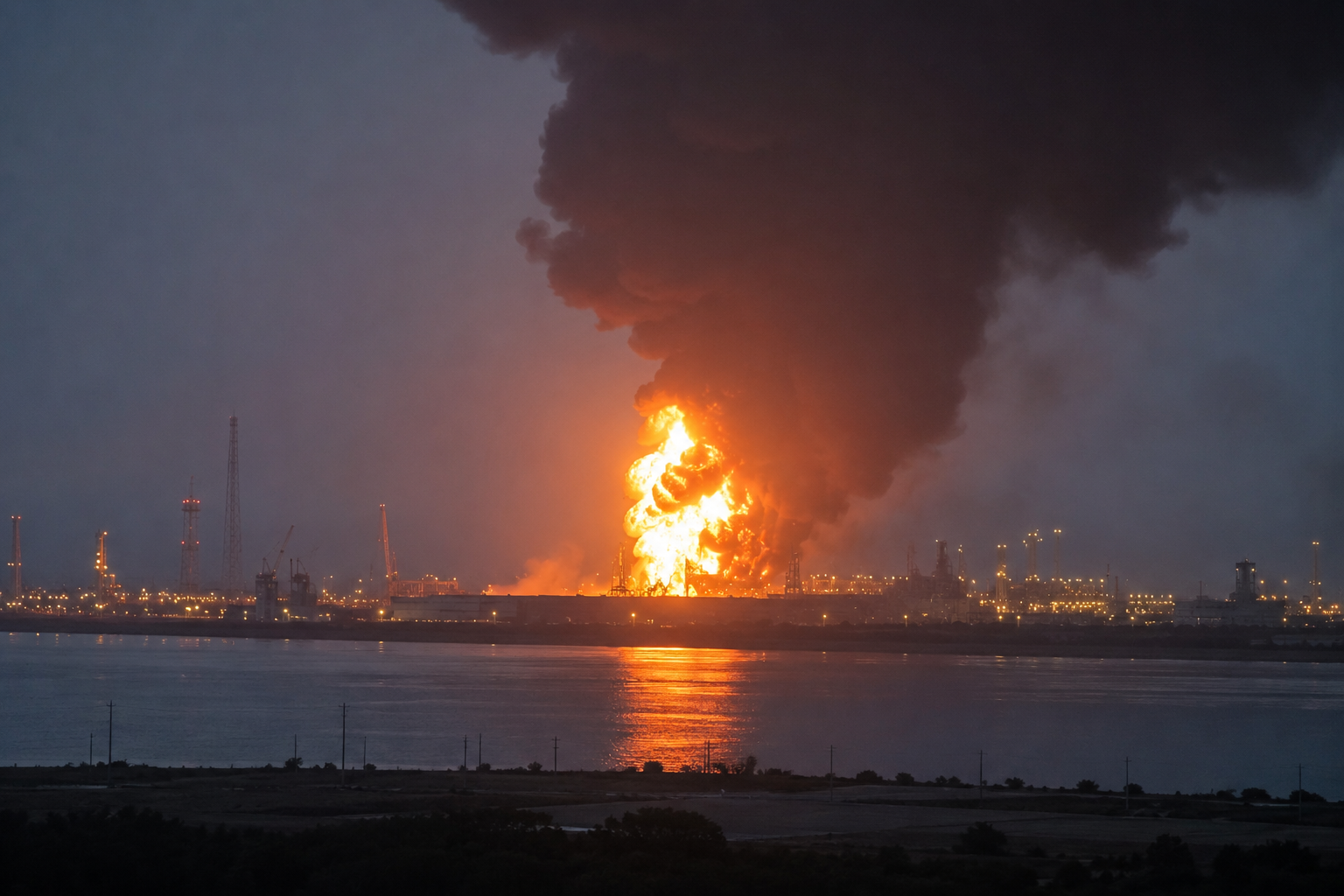
Brent crude climbed to $90 as U.S. strikes on Iran entered a ninth straight night. Asian chip stocks fell after Taiwan Semiconductor's new $100 billion U.S. expansion plan. Bitcoin held above $64,000 even after the GENIUS Act missed its stablecoin rulemaking deadline.
Monday opens with two stories still driving the market: AI spending and the Gulf.
Wall Street ended a weak week on Friday. The S&P 500 fell 1.01% to 7,457. The Nasdaq lost 1.4% to 25,520. The Dow dropped 406 points, or 0.77%, to 52,146. For the week, the S&P fell 1.6%, the Nasdaq lost 2.9%, and the Dow slipped 0.9%.
Taiwan Semiconductor (TSM) was the center of the move. The company reported another strong quarter but announced an additional $100 billion investment in U.S. chip manufacturing. Investors focused on the higher spending, sending the stock down 7.3%.
Meta (META) also weighed on sentiment after reports it is discussing a deal to provide as much as $10 billion of computing capacity to Anthropic. Shares fell more than 3.5%.
Asia followed Wall Street lower. South Korea's Kospi dropped 4.9% as Samsung Electronics fell 4.4% and SK Hynix lost 3.3%. TSMC rebounded 2% in Taipei. Hong Kong's Hang Seng gained 2.1%, while Shanghai added 1.2%.
Alibaba (BABA) stood out. Shares rose 5.15% after previewing Qwen 3.8 Max, a 2.4 trillion parameter AI model the company says ranks just behind Anthropic's Claude Fable 5.
The AI race continues to accelerate even as investors grow more cautious about AI valuations.
The Signal
Markets are rewarding better products but punishing bigger spending. That gap is becoming the defining theme of earnings season.
The Seven Hottest IPOs On Wall Street’s 2026 Watchlist — FREE
The 2026 pipeline looks very different from years past.
Here’s what’s attached to some of the companies expected to headline the calendar:
• $24 billion in annualized revenue.
• 55% year-over-year revenue growth.
• $1.4+ billion in pre-tax profit.
• 200+ million monthly active users.
• Eight consecutive years of profitability.
Unlike many IPOs, those aren’t projections ten years out - they’re current figures tied to a select set of private companies preparing for public markets.
The conflict has become part of the market's daily routine.
Brent crude briefly climbed above $90 a barrel before easing to $88.47, up 0.4%. WTI erased earlier gains to trade slightly lower at $82.36. Prices pared back after Iran's Foreign Ministry spokesman Esmail Baghaei said negotiations with the U.S. could be pursued based on national interests. U.S. Central Command completed a ninth straight night of strikes against Iranian targets after a third American service member was confirmed killed in recent operations.
Iran's Revolutionary Guard claimed full control over the Strait of Hormuz and renewed its pledge that no oil, gas, or fertilizer will pass through the waterway. The strait typically handled roughly 20% of the world's oil traffic before the war. Shipments have fallen sharply.
U.S. gasoline prices hit $4 per gallon again on Monday, matching levels last seen on June 17 when the interim U.S.-Iran agreement was signed. Energy Aspects founder Amrita Sen said a sustained Hormuz slowdown combined with depleted global inventories could push oil above $100 per barrel, warning the market remains "quite complacent" despite recent price increases.
Energy Signal
The June ceasefire is effectively over. Markets are no longer pricing peace. They are pricing a prolonged conflict.
The Fed meets in nine days, and expectations have changed quickly.
CME FedWatch now shows an 86.7% probability the Fed holds rates on July 29, up sharply from a week ago when markets assigned much higher odds to another hike after oil surged.
Fed Chair Kevin Warsh has continued balancing inflation concerns against softer economic data. He has warned that prices remain too high while avoiding any commitment on July policy.
Political uncertainty also increased overseas. Andy Burnham is expected to become the United Kingdom's next prime minister later today as the FTSE 100 opened about 0.7% lower.
Macro Signal
Markets have largely ruled out a July hike. September remains the bigger question, and oil is still the biggest risk.
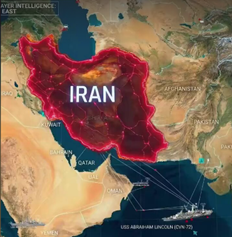
The REAL Reason Trump Is Invading Iran
For a moment…
Forget about Trump’s ties to Israel.
Forget about reports of Iran’s nuclear program.
Because my research has led me to believe we’re risking World War 3 with Iran for a completely different reason.
Click here to find out what it is.
If you have even a single dollar invested in the U.S. stock market, this is going to directly impact you.
The AI investment cycle continues expanding, but investors are becoming more selective.
Taiwan Semiconductor's (TSM) new $100 billion U.S. expansion is the largest chip investment announced this summer. Instead of rewarding it, investors questioned whether demand will justify another wave of spending.
Meta's (META) reported talks to provide up to $10 billion of computing capacity to Anthropic show that AI infrastructure companies are increasingly becoming customers of one another.
SK Hynix remains highly volatile following its U.S. listing, while Alibaba's latest AI model highlights how quickly Chinese developers are closing the competitive gap.
Capital Signal
The AI spending race is still growing. Investors now want proof that every new dollar invested will generate returns.
Bitcoin is handling geopolitical risk better than it did earlier this summer.
Bitcoin traded near $64,350 even after nine straight nights of strikes against Iran. The difference has been ETF demand. U.S. spot Bitcoin ETFs added $132.3 million on July 17 after a $424.7 million outflow earlier in the week. BlackRock's IBIT led with $136.5 million of inflows, while Ether ETFs added another $36.7 million.
Regulation remains the biggest story.
The GENIUS Act deadline passed on July 18 without final stablecoin rules from the Federal Reserve, OCC, FDIC, NCUA, or Treasury. Stablecoin issuers now face regulatory uncertainty.
At the same time, the Clarity Act appears close to reaching the House floor before the August recess, though supporters still need roughly nine Democratic votes to reach the Senate threshold.
Zcash (ZEC) climbed near $558 after continued buying from Multicoin Capital, a Robinhood listing, and progress on its Ironwood upgrade.
Strategy (MSTR) continues holding roughly 845,000 BTC under its Digital Credit Capital Framework.
The Verdict
Bitcoin is proving more resilient to geopolitical shocks. The next major catalyst is no longer price. It is regulation.
He predicted the 2008 financial crisis…
He predicted Trump’s election in 2016….
He even predicted the rise of COVID-19 writing:
“The chance we don’t have something on the scale of a national pandemic in the next few years is near zero”
That was three months before the first reported case.
If he’s right again, God Bless America…
Because this crisis will be tectonic in scale…and it's going to begin with the bubble popping in AI.
Markets are becoming more selective about what deserves a premium.
Nine nights of conflict have not broken Bitcoin. Missing the stablecoin deadline has not stopped momentum behind broader crypto legislation. A record chip investment was sold because investors want stronger evidence of future returns.
This week could bring a House vote on the Clarity Act, one of the biggest crypto policy events of the year. The Fed meets on July 29 with markets now expecting rates to stay unchanged.
Oil remains the wildcard.
If the conflict widens and Brent pushes toward $95, expectations for September could change as quickly as they changed this past week.
