


The Nasdaq rose 0.66% as chips recovered before Nvidia’s Wednesday report. Brent fell 3.9% to $88.58 as markets priced sanctions instead of war with Iran. Canada announced $20 billion of retaliatory tariffs, while Bitcoin briefly cleared $81,000 and gold held near a three-month high.
Tuesday gave the market what Monday did not: lower yields, cheaper oil and a chip rebound at the same time.
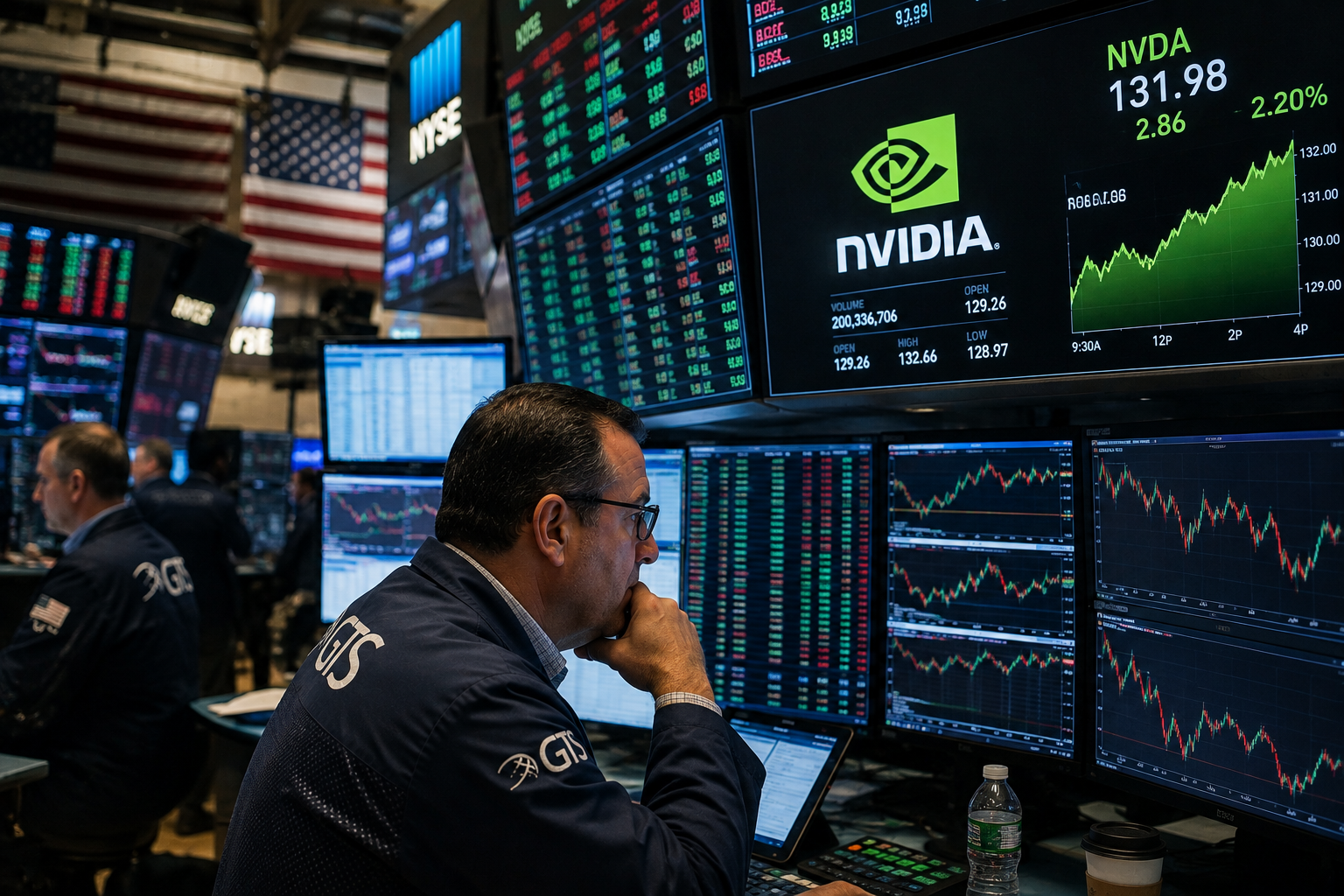
The S&P 500 gained 0.32%, the Nasdaq rose 0.66%, and the Dow added 0.3%. Nvidia (NVDA) rose over 2%, Micron (MU) gained 2.5%, and AMD (AMD) jumped 4.9%. The broader chip index rose 1.4%.
Rates helped. The 10-year yield fell to 4.63% and the 30-year dropped to 5.17% as markets kept weighing whether Treasury could use its near $1 trillion General Account to support bond buybacks.
The consumer side was weaker. Confidence fell to 89.4, a seven-month low, while Dick’s Sporting Goods (DKS) plunged 30.7% after cutting forecasts.
Wednesday now carries the real test. Nvidia reports alongside July PCE before Jackson Hole and Fed Chair Kevin Warsh’s Friday speech.
The Relief Before the Report
Stocks got lower oil and lower yields Tuesday. Nvidia now has to prove the AI trade can stand without either one.
7 Buy-and-Hold Stocks You’ll Wish You’d Found Sooner
Not every great buy-and-hold stock is a household name. Our 7 Stocks to Buy and Hold Forever report includes under-the-radar leaders quietly dominating their niches - alongside global brands with unmatched staying power.
Together, they form a portfolio core that can produce rising income and steady growth year after year.
You can get the entire list free today… but only if you act before it moves behind the paywall.
Oil finally priced the difference between economic pressure and another shooting war.
WTI dropped 3.1% to $82.36. Both WTI and Brent are down more than 5% this week as Washington shifts toward sanctions rather than immediate military escalation against Iran.
Treasury Secretary Scott Bessent said maximum economic pressure makes a large-scale restart of combat less likely for now. The State Department is preparing to return evacuated diplomats to the region, another signal that Washington does not expect an immediate expansion of the war.
Hormuz is still unresolved. Iran and Oman discussed a temporary joint shipping route, while Trump said the U.S. Navy had cleared mines from international waters. China remains the harder part of Bessent’s sanctions strategy because it buys most Iranian oil.
The military premium came out Tuesday. The shipping risk did not.
Energy Signal
Brent below $89 says markets prefer sanctions to strikes. China and Hormuz decide how long that discount lasts.
Lower yields gave markets another day of relief, but Canada added a new inflation channel.
Ottawa announced tariffs on roughly $20 billion of U.S. goods beginning September 8. Rates will range from 15% to 50% across about 700 products, including steel, aluminum, appliances, clothing, food, electronics and machinery.
The response follows Washington’s new 50% tariffs on roughly $20 billion of Canadian imports. Canada says it will answer dollar for dollar and rate for rate, while also offering C$7.5 billion in support for affected firms and workers.
That leaves the Fed with another cost pressure just as consumer confidence falls. The 10-year yield at 4.637% says the bond market welcomed Tuesday’s relief. It does not say tariff inflation disappeared.
Gold is making the same distinction. Spot gold held near $4,647 an ounce, close to a three-month high, and has gained more than 15% this month as the dollar weakens and Treasury’s buyback plans cap yields.
Macro Signal
Oil removed one inflation risk Tuesday. Canada added another. PCE now lands between falling energy prices and a trade war moving into actual goods.
Hidden in Tesla's Filing: A $12 Billion "Super Startup"
Pull up Tesla's most recent SEC filing. Page 5.
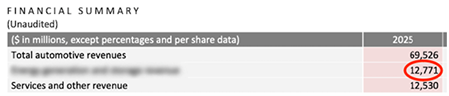
And you'll see a single line showing $12 billion in revenue from a brand-new "super startup" Elon Musk has been quietly incubating inside Tesla.
This new "super startup" has nothing to do with cars or robots or space or AI…
But it sits at the center of what Blackstone calls "a $23 trillion investment opportunity."
And on Oct 21st, Elon is expected to pull back the curtain and reveal exactly what he's building.
But Adam O'Dell already knows… and he reveals it all in this urgent video.
Nvidia gets the floor Wednesday with a much larger question than whether it beats consensus.
Analysts expect second-quarter revenue near $92.18 billion, almost double a year ago, driven by data-center sales that are expected to more than double. Third-quarter revenue is seen near $104.20 billion, up 82.8%, with adjusted gross margins around 75%.
The next chip cycle is already arriving. Vera Rubin shipments are expected to begin this autumn, and Morgan Stanley estimates the platform could contribute nearly $9 billion of third-quarter sales.
The concern is how that demand is being funded. Nvidia has helped arrange about $500 billion in AI infrastructure financing and agreed to guarantee up to $105 billion for OpenAI’s Ohio data-center lease. That makes Wednesday partly a test of whether demand is organic or increasingly supported by Nvidia’s own balance sheet.
SpaceX (SPCX) is making the same capital bet at a different scale. The company plans to spend up to $100 billion on a Louisiana Starship launch site that Musk says could support thousands of launches and about 10,000 jobs. Shares rose roughly 2.5%.
Capital Signal
Nvidia has to prove the demand behind AI financing is real. SpaceX is making the same wager on launch capacity. Capital is still flowing. Returns now have to follow.
Bitcoin finally crossed the number it had spent days testing.
BTC touched $81,240 before easing toward $79,300, extending a rally that began with more than $4 billion of bearish crypto liquidations. Spot bitcoin ETFs added $1.92 billion last week, their strongest inflow since October.
That matters because the squeeze is no longer doing all the work. ETF flows and longer-dated bullish options are now supporting the move.
Ether is showing the same shift. ETH traded near $2,478 after gaining almost 30% in a week and touching $2,532. U.S. ether ETFs pulled in $697.2 million last week, their strongest week of 2026.
The move is stretched. Ether’s daily RSI reached 79.12, while $2,500 to $2,550 remains the key resistance zone. A weekly close above it puts $2,700 and then $3,000 in view.
The Verdict
Short covering started the breakout. ETF demand kept it alive. Bitcoin holding $80,000 and ether clearing $2,550 would show whether voluntary buyers can finish what forced buyers began.
FREE Gold Ticker to Buy ASAP: (NYSE:___)
Jim Rickards – the world’s #1 gold expert – has just revealed one of his favorite gold plays… 100% FREE

As Jim sees it, we’re witnessing the biggest gold boom of the last 100 years – and those who keep their money on the sidelines are missing their chance at a fortune thanks to gold’s epic run.
But smart investors who get in now, could make 10X their money in the coming months.
Tuesday removed pressure from three places at once.
Oil fell below $89. Long yields eased. Chips recovered. That was enough to lift the Nasdaq 0.66%, but not enough to repair the consumer, where confidence fell to 89.4 and Dick’s lost nearly a third of its value.
Canada also turned tariff threats into policy, putting $20 billion of U.S. goods under new duties from September 8.
Bitcoin and gold are trading the other side of the same setup. Both are benefiting from lower yields, a softer dollar and doubts over how far Treasury can lean against the long end.
Now Nvidia gets the hardest job.
It has to show that nearly $92 billion of quarterly revenue, a $500 billion financing ecosystem and the next Rubin cycle represent demand that can pay for itself.
Tuesday lowered the discount rate.
Wednesday tests the return.
