


Brent fell below $97 after reports Pakistan is exploring new U.S.-Iran talks with China's support. The Nasdaq lost 0.6% as chip stocks fell again. New Section 301 tariffs took effect overnight. Bitcoin held near $64,100 as ETF inflows reversed.
The market found relief.
It did not trust it.
The Nasdaq fell 0.6%. The S&P 500 slipped slightly. The Dow gained 235 points, helped by a 3.5% rise in Apple (AAPL).
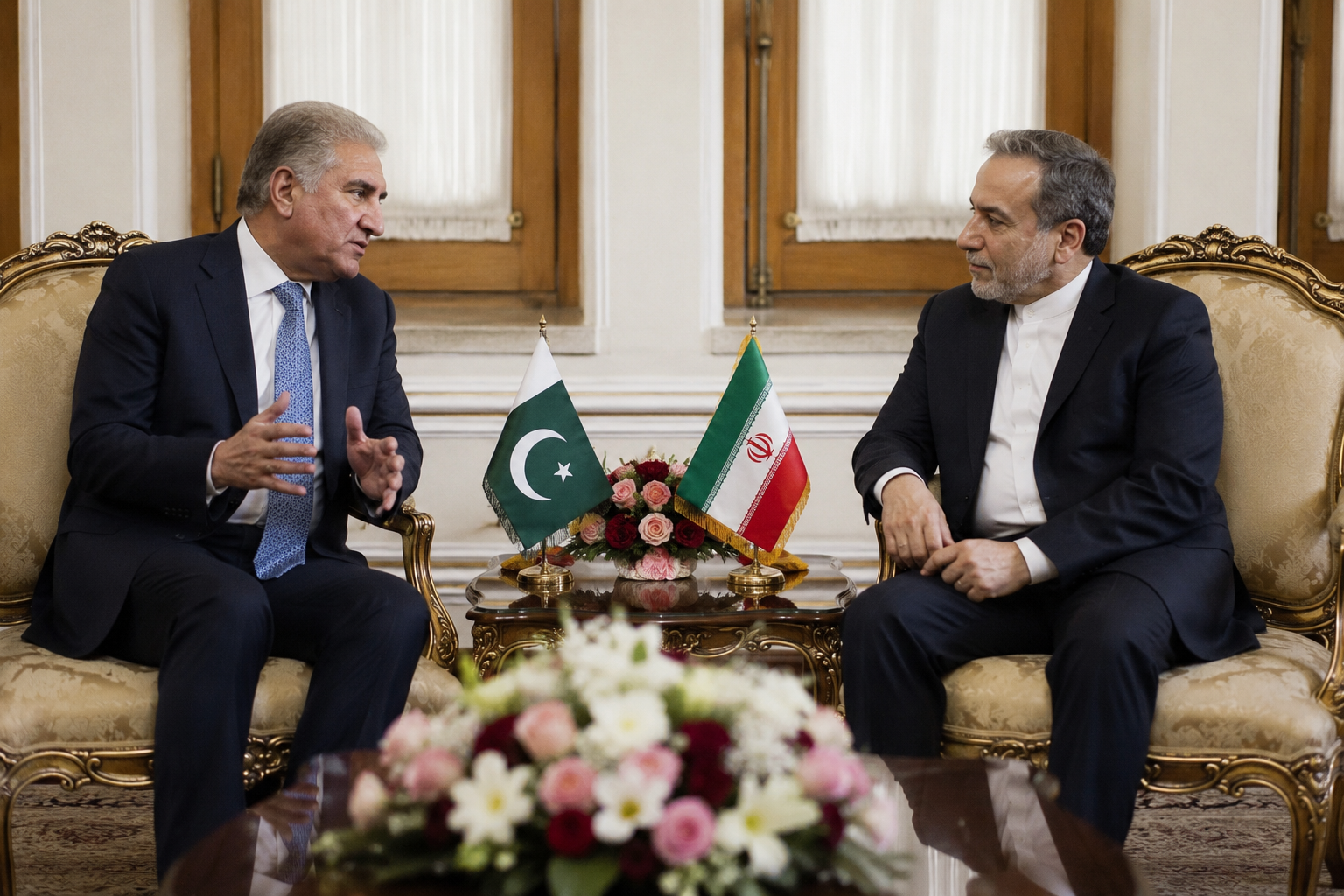
Oil fell after Pakistan, backed by China, is exploring a path to restart U.S.-Iran negotiations.
Stocks rallied early.
The rally faded.
Chip stocks led the market lower.
Intel (INTC) fell 8% despite strong earnings. Micron (MU) lost 7%. Broadcom (AVGO), AMD (AMD), and the VanEck Semiconductor ETF (SMH) also declined.
The market is still questioning whether AI spending is creating enough returns.
The Signal
Oil gave investors hope. Chips reminded them why they remain cautious.
New "AI Fuel" discovered near Grand Canyon
A small drilling crew just punched through to a discovery big enough to meet global electricity demand 140 times over, according to the International Energy Agency...
Right near the Grand Canyon.
See why Google, Berkshire Hathaway and the President of the United States are rushing to grab it >>
Oil stepped back.
The risk premium stayed.
Brent fell nearly 4% to $96.78. WTI dropped 3% to $89.31 after reports that Pakistan is trying to restart talks between Washington and Tehran with support from China.
Even after the decline, Brent gained almost 10% this week while WTI finished up about 8%.
Diplomacy returned.
So did the threats.
President Trump said he is considering a "massive attack" on Iran if conditions worsen. U.S. Central Command completed its thirteenth straight night of strikes, while more than 50,000 U.S. personnel remain deployed across the region.
Trump also repeated that Iran will be held responsible for future Houthi attacks on Saudi shipping.
Energy Signal
Diplomacy lowered oil prices. It did not remove the war premium.
Trade policy became inflation policy again.
New Section 301 tariffs of 10% to 12.5% took effect on goods from 60 trading partners overnight.
The measures cover about 99.4% of U.S. imports, although oil, autos, steel, aluminum, aircraft, fertilizer, critical minerals, and several other categories remain exempt.
The White House says the tariffs target forced-labor supply chains.
Several trading partners rejected that argument.
A second Section 301 investigation could bring additional tariffs later this year.
Another market is watching AI more closely.
Bond investors are beginning to question how hyperscalers will finance rising capital spending.
Alphabet (GOOGL), Amazon (AMZN), Meta (META), and Oracle (ORCL) all saw pressure in credit markets as investors demanded higher compensation for rising debt and spending.
Oracle's credit default swaps reached multi-year highs after its credit rating was lowered to BBB-.
Macro Signal
The AI buildout is no longer only an equity story. It is becoming a bond market story too.
He predicted the 2008 financial crisis…
He predicted Trump’s election in 2016….
He even predicted the rise of COVID-19 writing:
“The chance we don’t have something on the scale of a national pandemic in the next few years is near zero”
That was three months before the first reported case.
If he’s right again, God Bless America…
Because this crisis will be tectonic in scale…and it's going to begin with the bubble popping in AI.
The debate around AI spending continues.
Amazon, Meta, and Microsoft (MSFT) now report into that backdrop next week.
Another market continues growing.
Prediction markets.
Kalshi remains private, but investors are finding other ways to gain exposure.
CME Group (CME) and Interactive Brokers (IBKR) provide the infrastructure.
Robinhood (HOOD) is becoming one of the largest public distribution platforms.
Charles Schwab (SCHW) is benefiting from growing retail participation.
DraftKings (DKNG) continues investing in its own prediction market exchange.
The sector is becoming easier to invest in, even without buying Kalshi itself.
Capital Signal
The prediction market trade is expanding beyond one company. Public investors are now buying the ecosystem.
Crypto stabilized.
Momentum did not.
Bitcoin traded near $64,100 after briefly recovering above $65,000.
Spot Bitcoin ETFs recorded about $225 million in outflows Thursday, ending seven straight sessions of inflows.
Total cumulative inflows remain above $51.6 billion, with assets near $78.8 billion.
Ethereum held near $1,900 after modest ETF inflows.
XRP defended support near $1.10.
The market is still trading macro first.
Oil, Treasury yields, and geopolitical headlines continue deciding short-term direction.
The Verdict
Bitcoin remains supported above $64,000, but ETF flows and geopolitics still control the next breakout.
The Verdict Is In for AI Stocks in the second half of 2026
The AI trade that made the Mag 7 soar is starting to crack.
Overpriced giants like Nvidia, Tesla, and Amazon are facing slowing returns — just as smaller, lesser-known names are positioning to take market share.
Waiting could be costly.
Three under-the-radar AI stocks are already showing the potential to outperform the Mag 7 in the second half of 2026.
Make sure these alternatives are on your radar before markets open tomorrow.
Friday looked calmer.
Underneath, very little changed.
Oil pulled back because diplomacy returned to the headlines.
The war did not.
Chip stocks continued falling as investors questioned whether AI spending is becoming too expensive.
New tariffs are now active across almost all U.S. imports.
Bond investors are beginning to price the cost of financing the AI buildout.
Next week brings the Fed and earnings from Amazon, Meta, and Microsoft.
The market has already decided what it wants.
Strong revenue is no longer enough.
Investors now want proof that every new dollar spent on AI creates more than a dollar of value.
