


WTI jumped 5.2%. The Nasdaq slipped. Intel sold stock. The SPR fell below 300 million barrels. Wednesday's CPI carries the next Fed read.
Friday priced the Fed pause. Monday repriced the barrel.
The S&P 500 slipped slightly, the Nasdaq fell 0.3%, and the Dow lost 0.1%. The move was small after all three indexes posted their best week since April, but the inputs changed fast.
Oil was the main reason. WTI jumped about 5% over $82 per barrel, while Brent climbed near $88 as hopes for a quick Hormuz deal faded. The 10-year Treasury yield remained near 4.7%.
Tech added pressure. Intel (INTC) fell about 4% after announcing a $15 billion common stock offering. Nvidia (NVDA) and Apple (AAPL) each lost around 3% and 1.5%, respectively.
The AI trade is not disappearing. Broadcom (AVGO) continues to draw interest around custom AI chips, while Nvidia is working with Wall Street firms on as much as $500 billion in AI infrastructure financing.
The market simply has another input to price again.
The Signal
Friday removed the labor threat. Monday brought the oil threat back. CPI now has to settle the argument.
Before the AI Wealth Gap Widens, See This List
Blue-chip stability meets AI growth in 7 AI Stocks to Invest in Today
Inside: a top-10 dividend payer rolling out AI-powered logistics across 200 countries… a $300B titan embedding AI across its full product stack… and a semiconductor leader still trading 15% below its 52-week high.
All proven operators, all using AI to widen their lead.
See the list for free today – after that, you’ll have to pay.
The Hormuz deal slipped again.
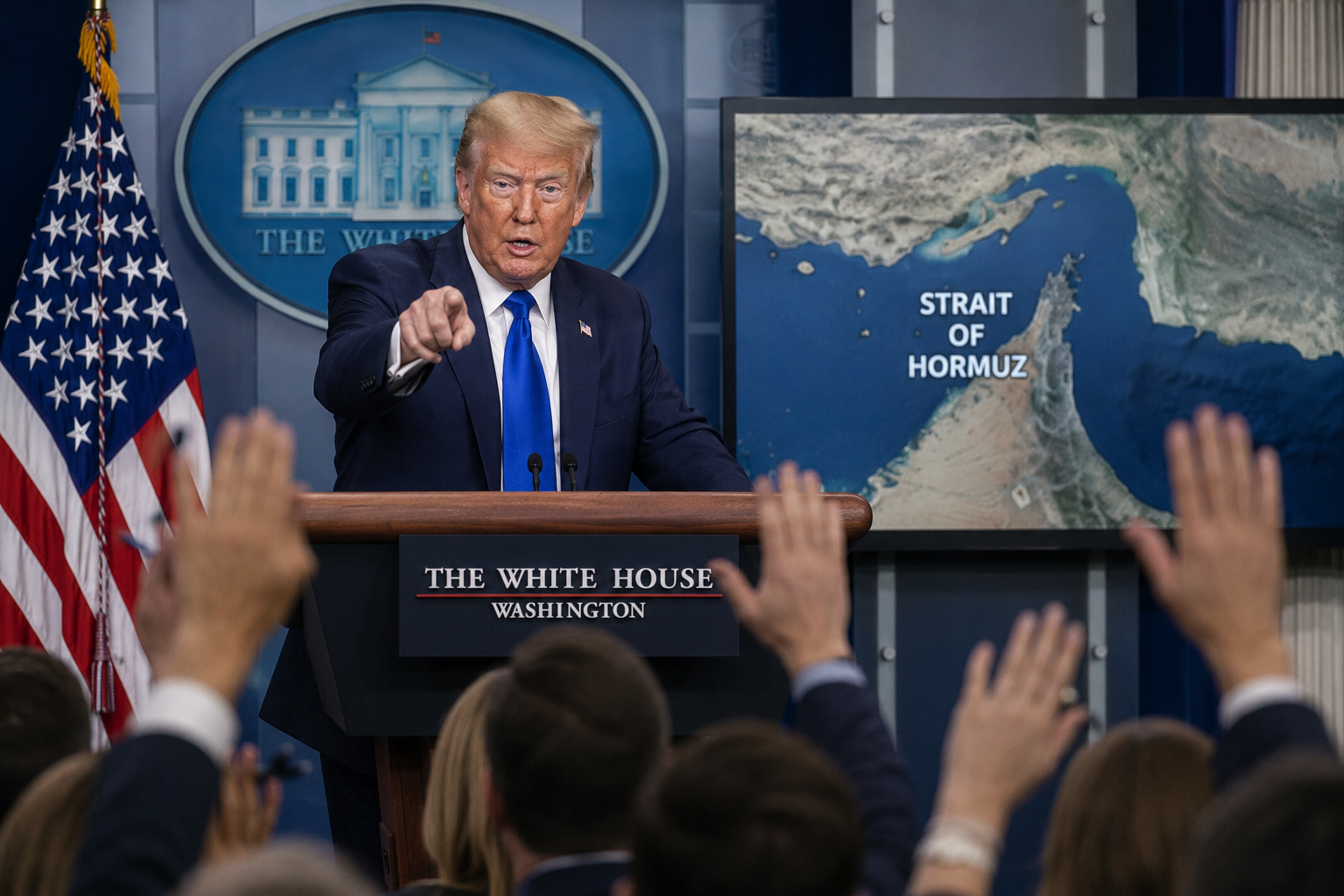
WTI rose to $82.13 and Brent reached about $87.85 after President Trump said the U.S. is only "semi-negotiating" with Iran. Tehran said Hormuz cannot fully reopen while the U.S. naval blockade remains.
That reversed part of last week's 7% oil decline, which followed Treasury Secretary Scott Bessent's suggestion that a freedom-of-movement deal could come quickly.
The issue is still route control.
Iran and Oman are discussing shipping lanes, but Washington wants free passage without tolls or approvals. Tehran wants sanctions relief, compensation and greater control over shipping terms.
America's buffer is also shrinking. The Strategic Petroleum Reserve fell 6.1 million barrels last week to 298.7 million, its lowest level since January 1983. It stood near 415 million before the war and could fall toward 243 million once the current release is complete.
Washington is using another tool.
Trump extended a limited Jones Act waiver for 90 days, allowing approved foreign vessels to move energy between U.S. ports. Since March, 210 voyages have moved nearly 55 million barrels under the waiver.
Energy Signal
The market priced a route. Iran priced leverage. Those are different trades, and America's emergency buffer is getting smaller while they argue.
Wednesday's CPI now has to clear a new oil tape.
July inflation is expected near 3.4% year over year, slightly below June's 3.5%. That would support the case for another Fed hold after July payrolls fell by 23,000.
But oil complicates the next step.
Crude rose more than 21% in July and jumped again Monday. Bank of America says a September hike remains in play if inflation surprises higher.
The Fed's benchmark rate remains at 3.50% to 3.75%. The last vote was 9-3 to hold, showing the hawkish wing is already large.
Gold is trading the uncertainty better than most risk assets.
It gained about 7% last week, its strongest week since January, as weak jobs data pushed yields lower. Gold held above $4,350 Monday, with resistance near $4,453. China has also continued buying, adding about 20 tons in July.
Macro Signal
Jobs weakened enough to delay the hike debate. Oil is strong enough to keep it alive. Wednesday decides which input the Fed has to respect.
World's Largest Investors Are Moving Their Money (Not Into AI)

While the media distracts you with stories about the next big AI IPO... The world's largest investors are moving their money into one asset – at the fastest pace in a generation. This asset has crushed the S&P 500's return over the past 12 months… More than TRIPLED the S&P 500's return in 2025… and has outperformed the S&P 500 over the past 25 years by more than 1,100 percentage points. According to one Wall Street veteran, with over 40 years of professional investing experience… the biggest gains could be still ahead. That's why he's urging you to make one money move now.
This ad is sent on behalf of Stansberry Research, 1125 N Charles St, Baltimore, MD 21201. If you would like to optout from receiving offers from Stansberry Research please click here.
AI spending is becoming a financing story.
Intel announced a $15 billion common stock offering, with underwriters able to purchase another $2.25 billion. The company plans to use the cash for capex, working capital and its AI infrastructure push.
The timing explains the market's reaction. Intel shares have gained 175% this year and the company recently raised capex guidance to $20 billion. Investors like the demand. They like dilution less.
Nvidia (NVDA) is attacking the same problem from another direction. The company is working with Apollo (APO), Blackstone (BX), BlackRock (BLK), Brookfield (BAM), Goldman Sachs (GS) and KKR (KKR) on a financing push that could reach $500 billion.
The goal is simple.
AI customers need data centers, power and GPUs. Nvidia wants Wall Street to help finance the infrastructure that keeps those GPU orders coming.
Goldman estimates AI-related capex could reach $765 billion this year and $1.2 trillion in 2027.
Capital Signal
The AI boom has moved beyond chips. The next constraint is capital, and Wall Street is being pulled in to finance it.
Bitcoin did not follow Friday's ETF optimism into Monday.
BTC traded near $64,482, slipping below its 50-day EMA near $64,674. Resistance sits near $66,869 and $72,359, while support is around $63,332.
The contrast with gold is getting harder to ignore.
Crypto is up only about 2% this month, while gold gained more than 7% last week. Gold futures on Binance generated more than $2.5 billion in volume Friday as traders moved toward safety.
That does not erase the stronger crypto flows underneath the market. Spot Bitcoin ETFs took in $853 million last week, their best week since April. But the macro bid is still choosing gold over Bitcoin when geopolitical risk rises.
Wednesday is the next test.
June's inflation slowdown helped crypto gain more than 6% that month. Another soft print could reopen the risk trade. A hot number, especially after oil's July surge, would reinforce the move toward gold.
The Verdict
ETF demand is improving, but Bitcoin is still stuck below resistance. Gold has the macro bid. CPI decides whether capital moves back toward beta.
The current economic chaos is just a preview …
What's coming next could be way scarier.
That's according to a strange investment secret - discovered just before the Great Depression…
And it's likely to catch most Americans by surprise.
If you're retired or planning to retire …
If you have any kind of money in the stock market …
Click here to learn more - before it's too late!
Learn How to Prepare
11780 US Highway 1,
Palm Beach Gardens, FL 33408-3080
Would you like to edit your e-mail notification preferences or unsubscribe from our mailing list?
Copyright © 2025 Weiss Ratings. All rights reserved.
Monday reversed the easiest part of Friday's trade.
Payrolls fell by 23,000, so the Fed had less room to hike. Hormuz looked closer to reopening, so oil had less room to rise.
The second part broke Monday.
Brent moved toward $88. The SPR fell below 300 million barrels. Washington extended a shipping waiver. Iran said the strait cannot fully reopen while the U.S. blockade remains.
At the same time, the AI buildout is asking for more capital. Intel is selling $15 billion of stock. Nvidia is helping assemble a financing network that could reach $500 billion.
Wednesday ties both stories together.
A 3.4% CPI print would show inflation still easing despite July's oil shock and give the Fed room to stay put. A hotter number tells markets the weak jobs report was not enough.
Friday bought the market a Fed pause.
Monday reminded it why that pause is not guaranteed.
