


The Dow jumped 2% to another record as Palantir surged 29% on AI demand. Oil fell toward $75 on hopes of a Hormuz deal. SpaceX beat revenue estimates but investors questioned another wave of AI spending.
Tuesday delivered the strongest risk-on session in weeks.
The Dow climbed 900 points, or 1.7%, to another record. The S&P 500 gained 1.8% and reached a new all-time high for the first time since June. The Nasdaq jumped 2.5% as investors piled back into technology and communication stocks.
The rally had two clear drivers.
First came earnings. More than 84% of S&P 500 companies have now beaten Wall Street expectations. Palantir (PLTR) led the move after reporting revenue of $1.94 billion, up 93% from a year ago. U.S. commercial revenue surged 149% to $764 million, while government revenue climbed 90% to $809 million. The company also lifted full-year revenue guidance to roughly $8.15 billion.
The second driver was oil.
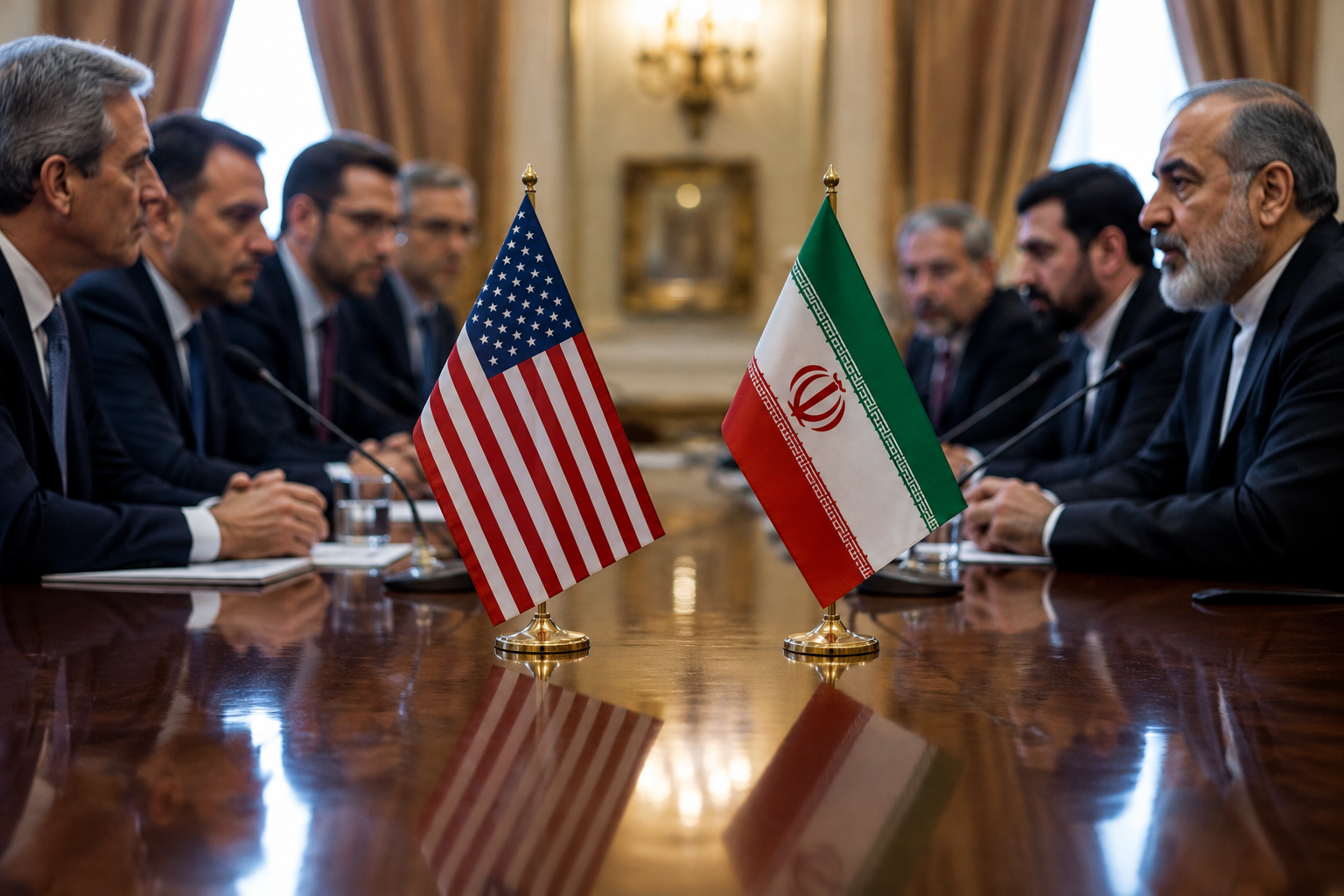
Treasury Secretary Scott Bessent said the United States could reach an agreement with Iran to reopen the Strait of Hormuz "today or tomorrow." Brent crude dropped more than 5% while WTI fell nearly 6%, easing inflation fears and giving investors another reason to buy risk assets.
The AI rally spread well beyond software.
Micron (MU) gained 7%. Marvell (MRVL) jumped 14%. Caterpillar (CAT) added 6% after beating earnings expectations and raising guidance as demand for AI data center equipment remained strong.
The market is no longer rewarding AI spending alone. It is rewarding companies proving customers are paying for it.
The Signal
Palantir delivered the proof. Falling oil removed another headwind. Markets rewarded both at the same time.
Wall Street Just Got a Warning About AI
Nvidia's credit default swaps saw their biggest one-day jump on record, with the company losing $250 billion in market value.
Investors are starting to realize that AI needs more than chips.
It needs real human data.
That's where Mode Mobile has quietly built its edge.
Mode's EarnOS rewards users for everyday smartphone activity, creating a vast ecosystem of opted-in, first-party data with applications across advertising, commerce, and AI.

While others build AI infrastructure, Mode is building the data layer that powers it.
Their traction is hard to ignore:
● 490M+ total users
● 100M+ monthly active users
● $115M+ cumulative revenue
● $100M+ invested
Deloitte named Mode the #1 fastest-growing software company in North America after 32,481% 3-year revenue growth in 2023.
And pre-IPO shares are still available at $0.52, but only until August 14th.
Secure your shares at $0.52 before 8/14.
Disclosures *Please read the offering circular and related risks at invest.modemobile.com. *Mode cumulative revenue includes full year revenue of businesses acquired in 2025. Mode Mobile recently received their ticker reservation with Nasdaq ($MODE), indicating an intent to IPO in the next 24 months. An intent to IPO is no guarantee that an actual IPO will occur. The Deloitte rankings are based on submitted applications and public company database research, with winners selected based on their fiscal-year revenue growth percentage over a three-year period.
Oil spent Tuesday pricing diplomacy instead of war.
Brent crude fell 5.3% to $79.36 while WTI dropped 5.7% to $75.77 after Treasury Secretary Scott Bessent said negotiations with Iran could reopen the Strait of Hormuz within days.
Attention has shifted away from military headlines toward the details of a possible agreement.
One key issue remains whether Iran will continue collecting transit fees from ships moving through the strait. Tehran is considering allowing European countries to clear mines from Hormuz, one of the largest barriers preventing shipping from returning to normal.
Markets welcomed the headlines.
Energy analysts stayed cautious.
Several warned Iran is unlikely to surrender control without meaningful concessions. Even if an agreement is announced, shipping activity may recover gradually after months of disruption. Reports that another cargo vessel was struck near Oman also show maritime risks remain active.
Energy Signal
Oil is trading the possibility of a breakthrough.
The shipping market is still waiting for one.
Lower oil prices gave inflation another break.
Falling crude helped ease pressure on Treasury yields and strengthened hopes that energy will become less of a problem for the Federal Reserve after last week's divided rate decision.
The market is still focused on inflation.
Three Fed officials voted for an immediate rate hike last week, keeping expectations for another move alive later this year. Lower oil prices help that discussion, but they do not solve it.
Attention now turns toward Friday's July payroll report.
The labor market remains the next major test for monetary policy. Strong hiring would strengthen the case for another rate hike. A softer report would give investors confidence that inflation pressures are easing beyond energy.
The market welcomed Tuesday's move in crude.
The Fed still needs confirmation from the data.
Macro Signal
Oil helped Tuesday's rally.
Friday's jobs report will decide whether it lasts.
Navellier Warns: This Could Leapfrog Elon's SpaceX IPO
Elon Musk could take SpaceX public in 2026, at an estimated $1.75 trillion valuation. The IPO would include Elon's AI model, Grok. But according to Louis Navellier, a radical new AI model will launch this year… over 1,000 times more powerful than Elon's. And the company behind it could outperform SpaceX in the process.
Click here for full details (including Louis' new pick — free).
This ad is sent on behalf of InvestorPlace Media at 1125 N. Charles Street, Baltimore, Maryland 21201. If you're not interested in this opportunity, please click here.
Palantir became the biggest winner of earnings season.
Revenue jumped 93% while management introduced a new theme investors quickly embraced: AI sovereignty. CEO Alex Karp argued companies increasingly want AI systems that protect their own data instead of handing sensitive information to outside language model providers.
Wall Street rewarded that message.
Shares surged almost 30%, one of the company's strongest sessions ever.
Amazon (AMZN) generated a different headline.
Founder Jeff Bezos disclosed plans to sell roughly 15 million shares worth about $4.1 billion after Amazon crossed a $3 trillion market value. The sales are part of a prearranged trading plan, but they arrived immediately after the company's strong AWS-driven rally.
Amazon also faces growing legal pressure.
New Jersey sued the company, arguing its delivery partner model suppresses competition for drivers while allowing Amazon to control key parts of the business. Amazon rejected the allegations and said delivery partners remain independent businesses.
After the close, SpaceX (SPCX) reported its first quarterly earnings as a public company.
Revenue jumped 92% to $7.81 billion, beating expectations. Losses were smaller than expected as Starlink generated $4.29 billion in revenue and $1.66 billion in operating income.
The AI business told another story.
It produced $2.56 billion in revenue but lost $1.26 billion as heavy infrastructure investment continued. Shares fell more than 6% after hours as investors questioned whether spending is moving faster than returns.
Capital Signal
Palantir proved AI demand.
SpaceX reminded investors that AI spending still has to earn its valuation.
Bitcoin moved higher with broader risk assets.
The world's largest cryptocurrency traded near $64,061 after gaining almost 1% during Tuesday's session.
The larger story came from the companies built around crypto.
Robinhood (HOOD) showed it no longer depends on digital asset trading.
Crypto transaction revenue fell 37.5% year over year to $100 million, yet total transaction revenue still matched a company record of $776 million. Options revenue climbed to a record $342 million. Equities generated $129 million. Prediction markets contributed $156 million, becoming a larger business than crypto trading for the first time.
Coinbase (COIN) continues telling a different story.
Revenue fell to $1.22 billion as weaker trading activity weighed on results. Analysts remain split over whether newer businesses such as stablecoins, tokenized assets and prediction markets can grow fast enough to replace transaction revenue.
Bitcoin itself has stayed relatively stable.
The companies built around it are changing much faster.
The Verdict
Bitcoin held above $64,000.
Robinhood showed diversification works. Coinbase is still waiting for trading activity to recover.
The Closest Thing to a Virtual AI Monopoly Wall Street Is Ignoring
A little-known company is building what may be the closest thing to a virtual monopoly the AI era has ever seen.
Only 3...
Yet it beat Apple, Amazon, and the S&P 500 combined...
While paying out $146,000 in total dividends on a 1,000-share stake.
Kevin O'Leary calls what it controls a "unicorn."
Right now, it's trading at a rare discount.
>>>Whitney Tilson reveals the name, completely free.<<<
This ad is sent on behalf of Stansberry Research, 1125 N Charles St, Baltimore, MD 21201. If you would like to optout from receiving offers from Stansberry Research please click here.
Tuesday made one trend impossible to ignore.
The market has stopped asking who is spending on AI.
It is asking who is earning from AI.
Microsoft answered that question last week. Amazon reinforced it. Palantir delivered perhaps the strongest proof yet, showing enterprise customers continue expanding AI spending when it solves real business problems.
Not every company cleared the same bar.
SpaceX reported stronger revenue but investors focused on another quarter of aggressive AI investment with losses still mounting. Amazon celebrated record cloud demand while founder selling and legal challenges reminded investors that leadership also brings greater scrutiny.
The broader market is becoming more selective with every earnings report.
Revenue growth supported by measurable returns continues attracting capital. Spending without a clear payoff continues drawing skepticism.
That has become the defining theme of this earnings season, and it is likely to shape the rest of the year long after the headlines around Hormuz fade.
