The bond market set the terms again.On Treasury's daily curve, the 10-year yield closed at 5.18%. That is its highest close since July 2007. The 30-year closed at 5.47%. The average 30-year mortgage rate rose to 7.03%. It had not been above 7% since the start of last year. Stocks bent without breaking. The Nasdaq fell nearly 1% in the morning. By the close, the S&P 500 and Nasdaq sat near flat, and the Dow was down about 0.3%. The Fed repricing kept going. Fed funds futures put the odds of an October hike near 73%, up from 55% a week earlier. Polymarket climbed to 65% from 54%. New York Fed President John Williams called one more increase by year-end a "reasonable" expectation. The Signal In mid-September, the 10-year kept closing near 5% and slipping back. It has now closed above 5% two days running. What worked like a ceiling is starting to act like a floor. The Fed's own rate sits below 4%, and the bond market is doing the tightening anyway. Oil's risk came back through the Red Sea.The Saudi-led coalition said it intercepted six ballistic missiles aimed at Taif and the port of Yanbu. It blamed Yemen's Houthis. The claim could not be independently verified. Brent settled above $106, up more than 3%. WTI finished above $94, up nearly 3%. The day ran both ways. Brent traded near $108 around noon, about 5% higher. Then word spread of a phased U.S.-Iran plan, and Brent fell $2.80 in five minutes. Iran would reopen Hormuz, and Washington would lift its blockade. No agreement exists. One Iranian official put the odds of success at "extremely low." Yanbu is the export end of Saudi Arabia's East-West pipeline, the kingdom's detour around Hormuz. The line restarted after a September 10 drone strike. Full capacity is still about six weeks away. Energy Signal The market had been treating the detour as a finished repair. Thursday's salvo was aimed at where it ends. While Hormuz stays shut, the detour carries the load, and now it is a target. No headline from New York removes that premium on its own. The bond selloff went global, and part of it is forced.Japan's 10-year yield rose above 3%, its highest since August 1996. Britain's 10-year gilt reached about 5.39% and France's about 4.72%. In the U.S., the 2-year closed at 4.87% and the 5-year at 5.03%. Some of the selling is traders getting out. A popular bet this month was the steepener, which pays when long yields rise faster than short ones. Hike bets lifted the short end too. "There appears to be a lot of pain on the street in fixed income," wrote Jefferies' Mohit Kumar. The debt stack sits underneath. Global borrowing passed $365 trillion, the Institute of International Finance said. It grew $10 trillion in the first half. Advanced economies paid more than $3.3 trillion in interest last year. That figure covers internationally traded government bonds. Forced selling can fade once crowded trades clear. Friday's durable goods report is the next read on which kind of selloff this is. Macro Signal Yields are the rent on the world's debt, and the rent is being reset. Position cuts end. Interest bills do not. The longer yields hold above 5%, the more the problem shifts from valuation pressure to financing pressure. From Our Partners Free Stock Pick: The Company First in Linefor America’s New Super Fuel The U.S. Army and Department of Energy are about to flip the switch on a revolutionary new fuel — and one obscure defense contractor has a five-year head start on every competitor. This joint, high-priority initiative — ordered by President Trump — is called Project Janus. And the first powerplant to run this new fuel is expected to go live before December 18, 2026… When it does, this company’s name will be everywhere. Full details — including the name and ticker symbol — are being revealed for free. 
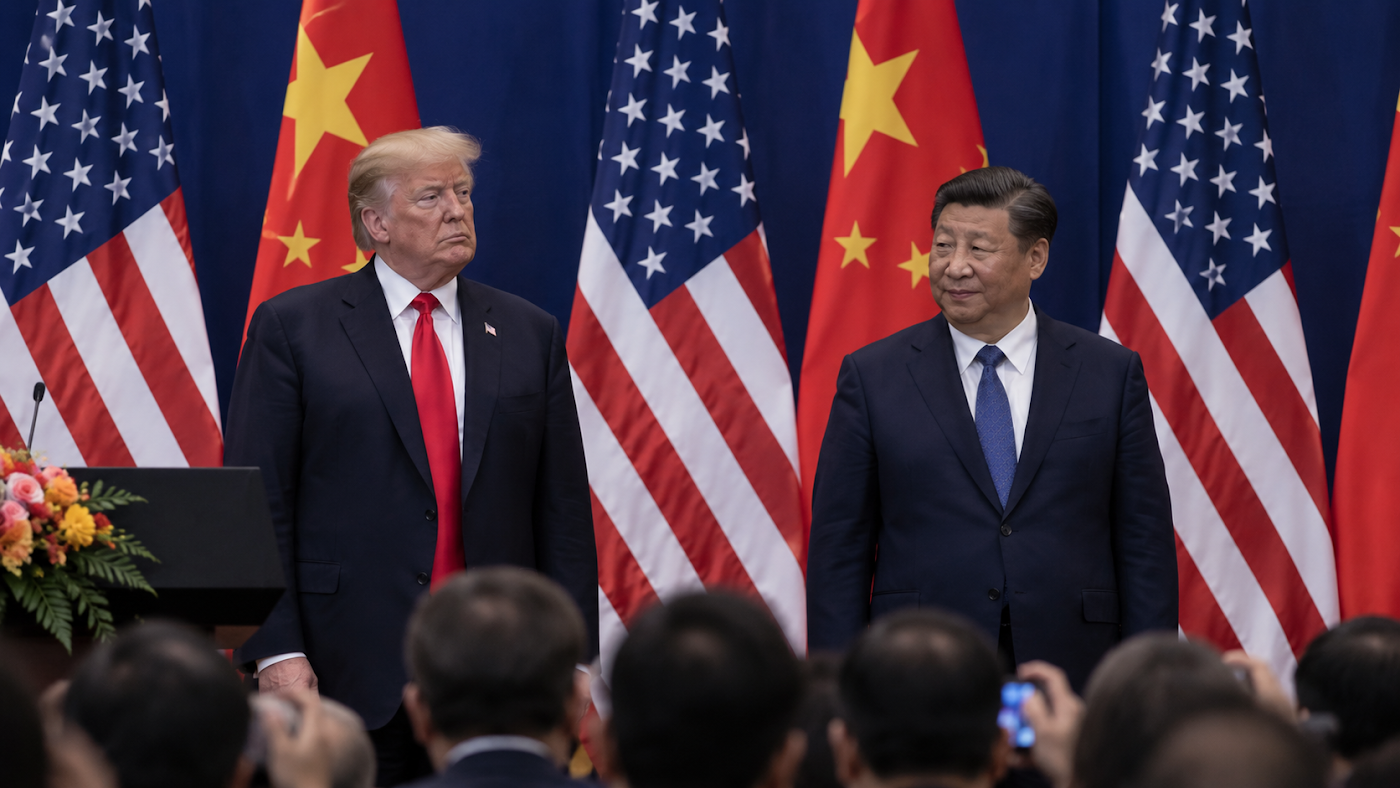
Click HERE to get the stock name, ticker, and the full Project Janus story for free. The summit opened with an extension, not a deal.Treasury Secretary Scott Bessent said the U.S.-China trade truce will be extended to January 10. The first truce ran a year. This one runs two months. He also called some of China's commitments "imperfect." AI, Iran, Taiwan and trade sit on the agenda through Friday. China's CSI 300 fell 1.7%. Oracle (ORCL) gave the AI buildout its own test. It served a force majeure notice on Project Jupiter's developer. Jupiter is its New Mexico data center campus. The clause lets a party delay obligations when events outside its control get in the way. The site is designed for 2.45 gigawatts. Its $18 billion construction loan already traded below 90 cents on the dollar. Oracle said the project "remains on our planned schedule." Its shares were down 6.4% by midmorning. Blue Owl (OWL), whose unit is the developer, also fell. Bloom Energy (BE), whose fuel cells are meant to power the site, dropped about 6.5%. The gas pipeline feeding the campus slipped close to six months. Capital Signal Oracle packed an umbrella before the forecast turned. The notice changes the lenders' risk more than the cash they are owed today. With long yields near 5.5%, a late building costs more to carry. The pipeline, the permit and the loan's price will show whether the notice stays a precaution. Money kept flowing in. The price kept drifting.U.S. spot bitcoin ETFs took in $346.9 million, their fifth straight day of inflows. The five-day total is about $2.65 billion. Bitcoin (BTC) fell to about $83,200 in Asian trading on Thursday, then recovered. It traded near $84,400 late Thursday, roughly flat over 24 hours, per live market data. That is still about 2.5% below Monday's close near $86,600. Ether (ETH) held near $2,690 and Solana (SOL) near $117. Higher yields raise the return on assets that pay income. Bitcoin pays none. When price falls while the steadiest buyers keep adding, the selling is coming from somewhere else. That could be leveraged unwinds, profit-taking or both. Friday adds a test. About $16 billion of bitcoin options expire on Deribit in the quarterly settlement. On Kalshi, a contract on bitcoin touching $87,500 before month-end priced a 34% chance. The Verdict ETF buyers are walking up a down escalator. They are steady, and they are not setting the price. Yields are. More inflows through Friday's expiry would show the buyers can absorb the selling. A first day of outflows would show the one steady bid stepping back. Partner Spotlight Is Elon About to Create a New Generation of Millionaires?
When Elon took SpaceX public, an estimated 4,400 employees became millionaires – with top executives, welders, and even cafeteria workers getting rich overnight. Sources close to Elon indicate that he's about to hatch a new opportunity to create generational wealth – and you don't have to work for Elon to see massive potential profits. Click here for the full details. This ad is sent on behalf of InvestorPlace Media at 1125 N. Charles Street, Baltimore, Maryland 21201. If you're not interested in this opportunity, please click here. The 10-year closed above 5% for a second day. Oil's risk moved to the detour. Oracle bought itself time on a campus that has not opened. Bitcoin's buyers kept showing up, and the price kept answering to rates.3 Market Signals Most Investors Aren't WatchingThe headline is usually the last place the story shows up.
By the time everyone is talking about a stock… the signals underneath it may have been changing for weeks. • Institutional money moves. • Options activity changes. • Management confidence shifts. • Fundamentals improve, or quietly begin telling a different story. That’s exactly what our analysts found in three stocks where the evidence stopped agreeing with itself.
And in all three cases, the story is still developing. See the 3 Stocks, Get the Free Report → |
|