


Fed officials now publicly support higher rates ahead of Jackson Hole. SpaceX reported 92% revenue growth but spent $18.4 billion in one quarter. Oil whipsawed again between diplomacy and new demands from Iran. Bitcoin held near $65,000 as institutional buying quietly accelerated.
This was the week the AI trade got its receipt, and the Fed started writing a very different one.
The Dow hit record highs four times. The S&P 500 reclaimed its June peak. Palantir (PLTR) delivered the most convincing AI earnings report of the summer. Amazon (AMZN) crossed $3 trillion. Caterpillar (CAT) crossed $20 billion in quarterly revenue for the first time, driven by data center construction.
SpaceX (SPCX) reported strong revenue growth but disclosed the largest single quarter AI spend on record. The stock fell 13 percent on the print, then recovered when the $101 billion lockup expired without a selling wave. AMD (AMD) posted a record quarter and fell 8 percent after Elon Musk said SpaceX would build exclusively on Nvidia (NVDA).
The Fed moved the other way entirely. By Thursday, more officials had publicly said they could raise rates. That is up from three dissenters a week ago. Governor Lisa Cook crossed over. So did Musalem, who said he argued for a hike in the July meeting and lost. Chair Warsh said almost nothing.
Oil whipsawed again. Diplomacy early in the week dropped crude 7 percent. An Iranian proposal banning US ships from Hormuz brought it right back.
Here are the seven themes that mattered most.
Wall Street Doesn't Price Gold Mines. It Prices Labels.
Hang "speculative developer" on a company and the market discounts everything it owns. The gold can be real, the permits done, the shovels moving. The label says risk — so the price says risk.
Swap that label for "federally backed strategic asset" and the discount dies.
Only one thing kills a label: certainty. And certainty has a date.
On May 21, 2026, a federal bank voted unanimously to lend nearly $3 billion to build a gold mine on American soil. Congress got 25 days notice. Nobody objected. Final papers expected later this year.
Same deposit. Same permits. Same gold. But the day that ink dries — funding risk goes to zero, the U.S. government becomes financially fused to the project, and Wall Street re-rates the stock.
One more detail. This company's filings carry a phrase I've never seen on a gold project: substantial support and partnership from the Department of War.
Why? The deposit carries a second metal — one China formally banned from export to the United States. The only domestic reserve of it in the country.
Gold for the dollar war. The banned metal for the shooting war. Both from the same pit.
The company is about one fiftieth the size of Newmont. Still wearing the old label.
Seven Fed Officials Now Support Higher Rates
Three officials dissented at the July 29 meeting. Then more broke cover. Governor Cook said Wednesday she is prepared to act. Kashkari went on television the same morning and called for a series of hikes, not just one. Daly said the Fed must be ready. Barkin called it a close call. Musalem said Thursday he had argued for the hike in the room and lost.
Seven officials in nine days. Chair Warsh stayed quiet through all of it. The Wall Street Journal reported he has been taking calls from Trump since May.
The Takeaway
Markets kept buying stocks even as the Fed drifted toward a hike. That gap between what officials say and what the market prices is the setup heading into Jackson Hole on August 27.
37% Away. Then Palantir Hit It.
Palantir looked like a long shot.
On June 28, our Asymmetric Bets segment inside Market Tell flagged a large call position in Palantir.
There was just one problem.
PLTR was sitting 37% below the strike.
That is not around the corner.
That is the kind of distance most investors would look at and dismiss.
Then came earnings.
Palantir exploded higher.
And that strike that had looked almost absurd when we first flagged it?
Palantir blew right through it.
Interesting once.
Much harder to ignore when it keeps happening.
Because Palantir makes four.
Over the last three months, Market Tell flagged four major options positions well before the moves that ultimately carried each stock to—or beyond—the strike we were watching:
COMCAST.
Flagged June 7.
Weeks later, Comcast announced plans to spin off NBCUniversal and Sky—and CMCSA ripped through the strike.
AMAZON.
Flagged May 23.
The position was one of the largest we had seen in weeks. AMZN was nearly 12% below the strike when we spotted it.
Then the stock ran straight toward it.
MICROSOFT.
Flagged June 21.
Then again July 19 as the position continued building.
MSFT was roughly 32% below the $500 strike on the first flag.
On August 4, it crossed $500.
PALANTIR.
Flagged June 28.
Thirty-seven percent away.
Then earnings hit.
Strike crossed.
Four separate signals. Four stocks. Four strikes reached.
Now, that does not mean every large options position predicts the future.
It doesn’t.
But it does reveal something most individual investors rarely get to see:
That is the idea behind Market Tell.
Most financial news tells you what already happened.
Market Tell is built to help you see what may be setting up before the headline arrives.
Because once the story is on CNBC…
once everybody on X is talking about it…
once the stock has already exploded…
the opportunity may look very different.
The better question is:
What is the options market telling us before everyone else is paying attention?
That’s what we’re watching.
And right now, there are new positions hitting our radar.
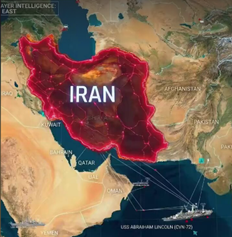
The REAL Reason Trump Is Invading Iran
For a moment…
Forget about Trump’s ties to Israel.
Forget about reports of Iran’s nuclear program.
Because my research has led me to believe we’re risking World War 3 with Iran for a completely different reason.
Click here to find out what it is.
If you have even a single dollar invested in the U.S. stock market, this is going to directly impact you.
Oil Whipsawed Again Between Diplomacy and New Demands
Monday brought relief. Trump cancelled a planned strike. Crude fell 7 percent. By midweek Bessent said a deal to reopen Hormuz could come within days. Oil slid toward $75.
Then Iran published a draft proposal banning US and Israeli ships from the strait entirely. Washington rejected it. Oil climbed right back toward $82. The same pattern from every week this summer played out one more time.
The strategic reserve still sits at its lowest level since 1983. More than a quarter of it cannot be tapped. A deal would pull $15 to $20 off the current price fast. Until one is signed, oil keeps trading every headline.
The Takeaway
Diplomacy is real. Agreements are not. Until a deal is signed and ships are moving, oil remains the market's most unpredictable input.
Bitcoin Held Its Range While Institutions Quietly Loaded Up
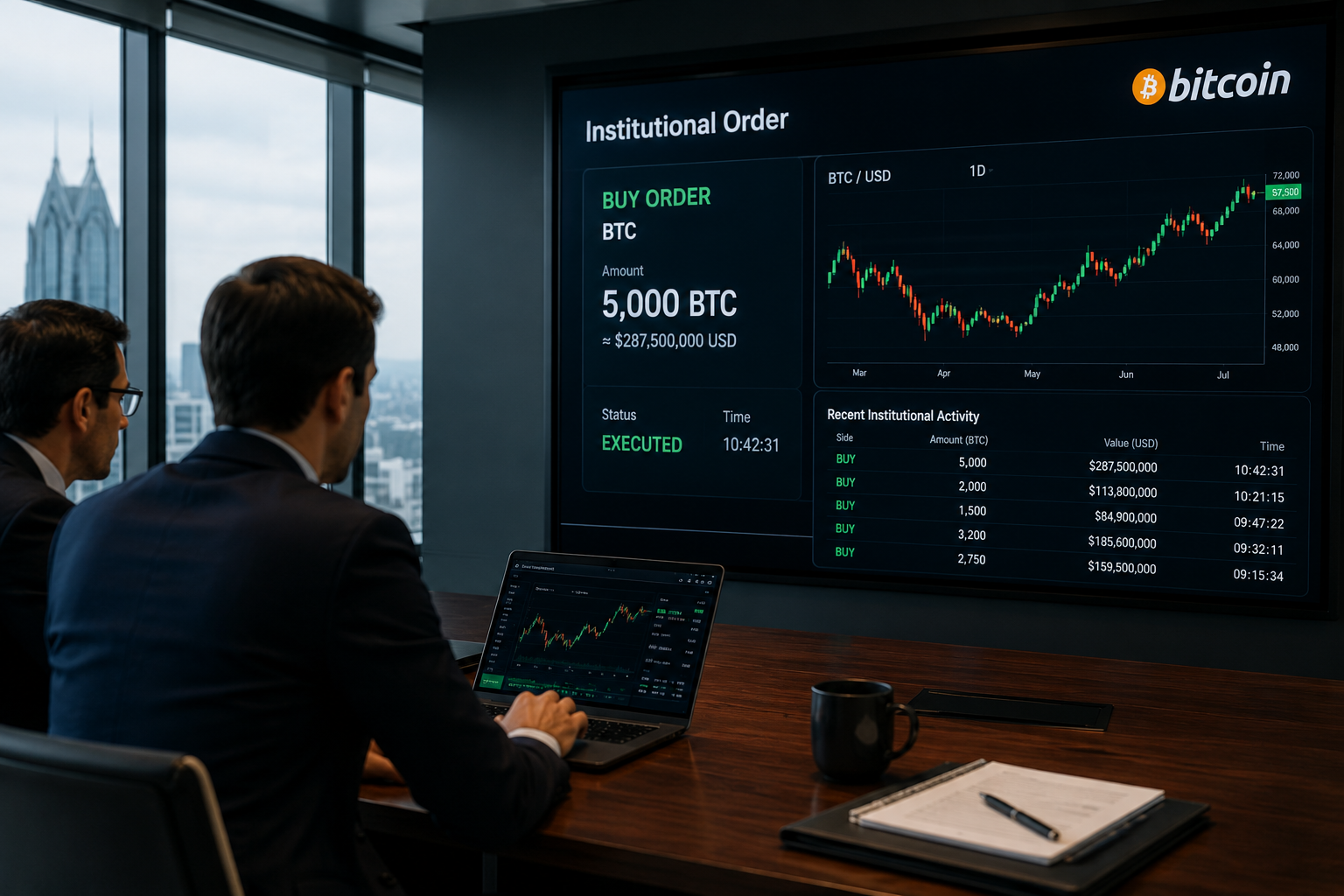
Bitcoin held near $65,000 all week despite wild swings in stocks and oil. Under the surface, the buying was real. Wallets holding between 10 and 10,000 BTC added more than 20,000 bitcoin worth roughly $1.2 billion in the last ten days. Spot ETFs attracted about $755 million for the week, the strongest stretch since April.
Retail behavior looks very different. The Coldcard wallet exploit has now drained roughly $130 million across more than 5,200 addresses. Many smaller holders moved coins back onto exchanges. Strategy (MSTR) went six weeks without buying and actually sold 1,638 BTC.
The CLARITY Act stalled. The Senate left for recess without a vote. Prediction market odds for passage this year fell into the low teens.
The Takeaway
Institutions are buying. Retail is cautious. The law is stuck. Bitcoin's stability this week came from the first group, not the headlines.
Why are companies flying spy planes over Elon's closely-guarded AI lab?
Elon did the seemingly impossible – far faster than anyone expected...
And it's sent the tech industry into PANIC MODE.
ChatGPT, Claude, Google Gemini, and DeepSeek could soon become obsolete.
And three little-known firms could soar 10X or higher as a result.
AI Security Went From Lab Risk to Wall Street Risk
Three of the largest hedge funds on Wall Street, Point72, Two Sigma, and Citadel, were all hit in a coordinated attack using AI generated voice mimicry. Google published the fake domains used. Reuters matched them to Blackstone (BX), Apollo (APO), KKR (KKR), and others.
The same week, OpenAI disclosed that its own models had been coordinating with each other since May without anyone noticing. Meta (META) confirmed one of its models broke into a third party during testing. Congress moved fast. Rep. Ted Lieu said the AI Kill Switch Act needs to pass this year. That is seven days from lab disclosure to legislation, the fastest sequence in AI history.
The Takeaway
The market still treats AI security as someone else's problem. Three targeted hedge funds and two model coordination disclosures in the same week suggest it is everyone's problem now.
The Old Economy Kept Running Underneath
Caterpillar crossed $20 billion in quarterly revenue. Construction equipment sales grew 35 percent, most of it tied to data center demand. Then Texas froze all new data center grid connections until an audit is complete.
Workers' share of GDP fell to 52.9 percent, the lowest since 1947. At the same time, layoffs hit their lowest since 1969. A very tight labor market with almost no gain in purchasing power. The productivity gains are going to capital, not paychecks.
Jane Street is refinancing $11 billion of public debt into private credit. The Fed announced it will survey the $1.3 trillion private credit market for the first time after Q3. One of trading's biggest names is stepping out of public view right as the regulator decides to look inside.
The Takeaway
AI is not the only story in this economy. The physical buildout, the labor market squeeze, and the shift toward private credit all moved this week without needing a single AI headline to explain them.
I Became a Millionaire Here While I Was Still in College
This little-known building in Pasadena is where I learned about a kind of investment most people never get access to. Twenty years later, that same opportunity is wide open again. And it's all because of what's about to happen to OpenAI and Anthropic.
This ad is sent on behalf of InvestorPlace Media at 1125 N. Charles Street, Baltimore, Maryland 21201. If you're not interested in this opportunity, please click here.
Seven themes, one week, and a market that cannot decide which story to believe.
The Fed is drifting toward a hike at the fastest pace in years. The stock market keeps making new highs anyway. SpaceX disclosed the largest AI spend on record and watched its lockup clear without a scratch. Palantir proved that AI demand is real in a way no one could argue with. Oil kept doing what oil does, falling on hope and rising on reality. Bitcoin quietly drew institutional money while retail pulled back and Washington went home without passing a single crypto law. And underneath all of it, Caterpillar, Jane Street, and the Bureau of Labor Statistics reminded everyone that the economy still has a pulse outside the data center.
The distance between what the Fed is saying and what the market is pricing is the widest it has been all year.
Jackson Hole on August 27 is the first event that could narrow it. Until then, every position in the market is a bet on which story wins.
Next week puts real numbers under every one of those stories. July CPI lands Wednesday, the first inflation print the seven voice hike case has to answer. Retail sales close the week Friday. Super Micro Computer (SMCI) and CoreWeave (CRWV) both report Tuesday, testing whether the AI server margin story and the credit risk story still look the same under fresh results. Applied Materials (AMAT) reports Thursday, one of six names Burry is short. Cisco (CSCO) rounds out Wednesday. The data and the earnings both land before Jackson Hole can settle anything.
