


The Dow fell 637 points as Treasury yields erased Wednesday’s relief. Walmart dropped 9% despite raising guidance. Brent climbed above $93 after Trump promised the toughest sanctions yet on Iran. Bitcoin held above $72,000 as spot demand joined the short squeeze.
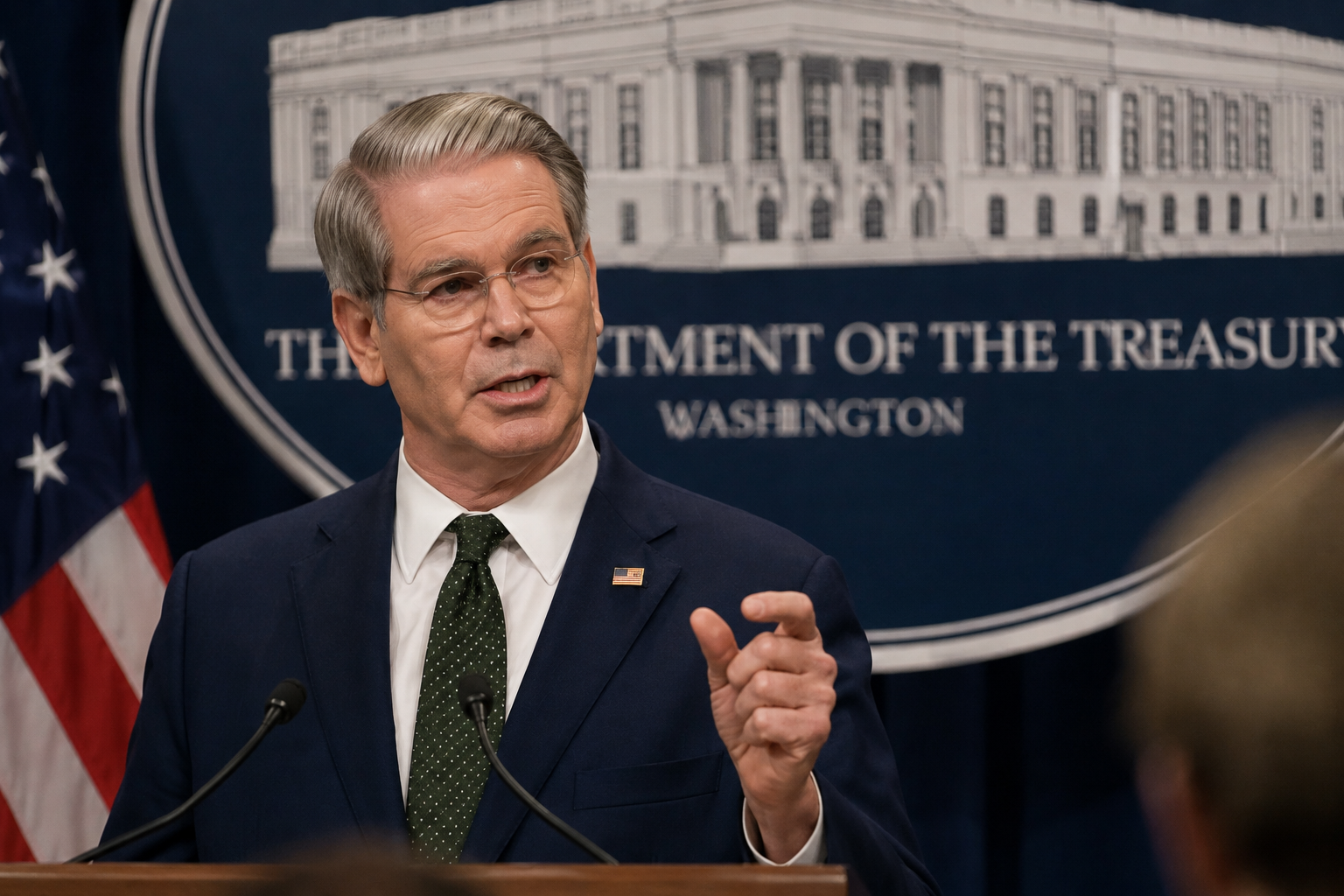
Treasury bought one day. The bond market took it back.
The Dow fell about 1.3%, while the S&P 500 lost 0.9% and the Nasdaq dropped 1%. The 10-year Treasury yield climbed back to 4.71%, above where it traded before Wednesday’s expanded buyback announcement. The 30-year rose to 5.25%.
Walmart (WMT) added pressure. Shares fell roughly 9% even after revenue rose 5.9% and the company raised its full-year outlook. U.S. comparable sales grew 2.6%, below the 3.5% expected, showing that even the value consumer is becoming harder to impress.
SK Hynix moved the other way in Asia. Shares surged more than 12% after the company accelerated a 40 trillion won, or $28.7 billion, buyback-and-cancellation program while keeping heavy AI memory investment intact.
Bitcoin ignored the equity selloff and pushed above $72,000.
The Signal
Wednesday’s relief came from lower yields. Thursday proved the market still does not believe Treasury can permanently suppress the cost of long money.
7 Income Machines Built to Make You Rich
The 7 Stocks to Buy and Hold Forever aren’t just plays for the next quarter - they’re built to deliver for decades.
These are blue-chip companies with fortress balance sheets, elite dividend track records, and the staying power to outperform in bull and bear markets alike.
Some are Dividend Kings, others are on the path there, and all are proven wealth compounding machines.
Download the full list now - before it disappears behind the paywall.
Oil added the second pressure point.
WTI pushed above $88 while Brent climbed above $93 after Trump promised an “Economic D-Day” against Iran and the toughest sanctions campaign Washington has used against any country.
The administration says it will target oil smuggling, cash transfers, currency swaps, front companies and ship registries used to keep Iranian trade moving. Iran called the plan economic terrorism.
Hormuz remains the leverage point underneath it. Shipping traffic is still far below normal, and the UAE has already suspended trade and financial dealings with Iran after missile attacks.
The market is now pricing a shift from failed diplomacy toward economic isolation. That keeps the risk of military retaliation alive even if Washington does not launch another strike.
Energy Signal
Sanctions replace talks, but they do not remove supply risk. Brent above $93 is the market charging for what Iran might do next.
Treasury’s long-bond intervention lasted less than a session.
The 10-year yield rose more than five basis points to 4.704%, while the 30-year climbed to 5.248%. Treasury had just doubled planned buybacks in the long end, but investors quickly returned to the same structural concerns.
U.S. debt has now crossed $40 trillion for the first time, reaching $40.047 trillion. Debt held by the public stands at $32.266 trillion. July alone produced a $432 billion deficit, while interest costs have become the second-largest federal spending line behind Social Security.
That is why the buyback did not hold. Treasury can support liquidity. It cannot erase deficits, supply or the competition for capital created by AI infrastructure.
Fed minutes added another limit. Officials said higher rates could still be needed if inflation stops cooling. Thursday’s strong Philadelphia Fed reading gave that camp more support.
Macro Signal
The debt problem has moved from Washington accounting into market pricing. Treasury can smooth the curve. It cannot remove the premium investors now demand.
Elon's About to Silence the Skeptics Again…
In 2016, a Daimler executive called Tesla "a joke that can't be taken seriously compared to the great car companies of Germany." Today, Tesla is over 7 times bigger than Daimler, Mercedes-Benz, Porsche, Audi, Volkswagen, and BMW put together. Fortune says his latest plan will be a "giant money-loser." Here's why Elon's about to prove Fortune wrong...
This ad is sent on behalf of InvestorPlace Media at 1125 N. Charles Street, Baltimore, Maryland 21201. If you're not interested in this opportunity, please click here.
Walmart’s quarter showed a consumer that is still spending, but with more resistance.
Revenue beat and the full-year outlook rose, yet U.S. comparable sales missed. High food and fuel costs remain a drag. The faster-growth businesses were stronger: global e-commerce rose 23%, advertising climbed 38%, membership revenue gained 17%, and Sam’s Club U.S. sales rose 8.8% to $25.7 billion.
Tariff refunds also helped. Walmart said it is eligible for roughly $2.9 billion and plans to use some of that money to lower prices.
The political capital cycle is moving just as fast. U.S. companies have already spent a record $517 million on House and Senate races in the first 15 months of the 2026 cycle. Crypto, AI and online gaming supplied at least $294 million.
Fairshake still has about $130 million available, while AI super PAC Leading the Future has raised $140 million. Sports betting firms including DraftKings (DKNG), FanDuel, Fanatics and bet365 have contributed more than $72 million.
Capital Signal
New industries are spending before Washington finishes writing their rules. That is not just lobbying anymore. It is part of the capital strategy.
Bitcoin’s breakout survived the return of higher yields.
BTC rose above $72,000 for the first time since May, extending its two-day gain to roughly 12%. Ether traded above $2,280, while crypto-linked names including Coinbase (COIN), Circle (CRCL) and Strategy (MSTR) rallied.
The move started as a squeeze. Wednesday produced roughly $2.75 billion in Bitcoin short liquidations, with broader crypto shorts also hit hard. But the second leg looks different.
Spot and ETF demand strengthened as Bitcoin held above $70,000. Trading volume rose roughly fivefold from last weekend’s yearly low, while CryptoQuant said spot and perpetual-futures demand turned positive together for the first time since Bitcoin’s October 2025 peak.
Washington added the policy catalyst. Trump urged Congress to pass a “fair version” of the CLARITY Act before year-end after meeting executives from Coinbase, Kraken, Robinhood (HOOD), Ripple and Chainlink. Hyperliquid also remained in focus after Trump backed an onshore regulatory path.
Bitcoin is still roughly 40% below its October 2025 high near $126,000, so this is not a return to the old cycle yet.
The Verdict
The squeeze opened the door. Spot demand is deciding whether Bitcoin can stay through it. Holding $70,000 matters more now than the liquidation headline that got it there.
ICE. The Epstein Files. Tariffs.
That’s what the media wants you to focus on.
But behind the scenes, it seems President Trump is quietly preparing something far more shocking — that will leave even his most loyal MAGA patriots stunned.
It’s NOT being debated on cable news or on X.
But it could make you enormously rich in the second half of 2026.
Thursday reversed Wednesday almost everywhere except crypto.
Treasury doubled buybacks and got one day of lower yields. The 10-year then moved back above its pre-announcement level. Walmart beat revenue and raised guidance, yet fell 9% because the comp number said the consumer is getting harder to move.
Oil climbed above $93 as Washington shifted from negotiation to economic warfare with Iran. U.S. debt crossed $40 trillion. The Fed minutes kept future hikes alive.
Bitcoin still held above $72,000.
That is the divergence worth watching. Equities needed lower yields and lost them. Crypto got the same reversal and kept its breakout.
The next question is whether Bitcoin has finally found demand strong enough to trade through the macro pressure, or whether Thursday was simply the last part of the squeeze.
